Pampers and Paklava

  • Home
  • Photography
  • Travel
  • Food
  • Garden
  • Contact

Wanna bite? Maple Biscuts for Teethers

May 2, 2012 by Beth Shepherd

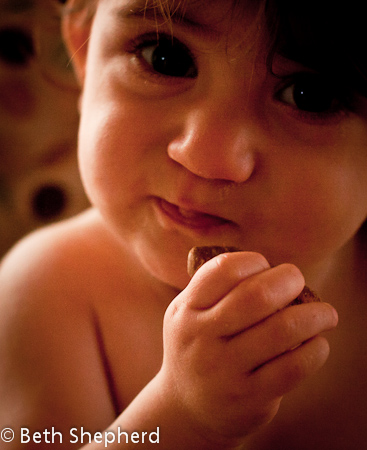
Maple Teething BiscuitsThis is Baby Bird’s week, a milestone week for her. So it only seemed proper that all my posts this week should be about—or by—her. First up, Baby Bird’s debut food review:  Maple Biscuits for Teethers from Healthy Times2.

Mmm-nana-babaop-mmm.

[Wow, these biscuits are really tasty]

Ra-RAAAA-ah-mmmm—dadadada-mmmm.

[This is my first time chewing and I have to say that these biscuits are great for my new teeth and gums]

Mamam-dddaaada-nananana-mmmm.

[They also fit nicely into my pint-sized hands]

Lalalal-MMMM-dada-nananan-mmm-AAAH.

[No wheat, soy or dairy. But organic and with calcium!]

Buhbuh-wha-wha???

Recipe? Sorry, I’m just teething not cooking.

Want to take a bite out of more deliciousness?

Check out Wanderfood Wednesday!

Filed Under: Food Tagged With: Healthy Times2, Maple Biscuits for Teethers, organic

My kingdom for a slice of Lahmajun

April 25, 2012 by Beth Shepherd

Armenian LahmajunI still remember the first time Big Papa and I ate Lahmajun, Armenia’s take on pizza. On our first trip to Armenia in 2009, our translator took us to Mer Taghe, a tiny slice of a restaurant on bustling Tumanyan Street in the heart of Yerevan. Lamb and spices atop a thin crust of dough, add a squeeze of lemon and a side of “Tan with gas” (a fizzy salted yogurt drink) to sip, both of which offer a tangy foil to the succulent lamb.

IMer Taghe Lahmajun was instantly smitten. This says a lot, because I am not a huge (American) pizza fan, which I generally find to be too cheesy-bready for my taste. Big Papa, surprisingly, was not so over-the-moon. I say “surprisingly” because he is a fan of lamb and also falls in the likes cheesy-bready food camp.

Mer Taghe’s main gig is Lahmajun with lamb (or, for vegetarians, with herbs), and although there are a few other dishes on the menu (like Georgian Khachapuri), I’ve never been there and ordered anything else. There are four small tables with high stools inside and a smattering of plaid tablecloth-covered tables outside. Dinner arrives quickly and two people can have one Lahmajun and one Tan each for less than $10. It’s quick; it’s cheap; and, it’s so dang good.

Flash forward to 2012: Big Papa’s fourth trip to Armenia, my fifth. And, this time we have a baby along for the ride.

“Do you want to go to the Lahmajun place?” Big Papa queries.

“Uh, we’ve already been there several times,” I reply.

“Yes, but I’ve really come around. I’m a Lahmajun beliver,” he tells me with a pleading tone in his voice.

“Okay,” I say. “Those guys at Mer Taghe are pretty awesome and they adore Baby Bird.”

Two more nights pass. We have a cranky baby on our hands.

“Do you want to go to the Lahmajun place?” Big Papa lobbies once again. “We could get take out.”

I smile. “Sure.”

Lahmajoun and toysWe go. Our favorite four guys are there, instantly cooing, oohing, and entertaining Baby Bird. In minutes, our Lahmajun is ready for the road. And two Tans.

Back at our apartment, on the coffee table littered with baby toys and books, and after we put the baby to bed, we eat our Lahmajun and drink our Tan.

“Mmmm,” says Big Papa.

“Mmmm,” I echo.

Mer Taghe Lahmajun was one of the first meals we had in Armenia and it was also one of the last. Back home in Seattle, I can’t stop myself from reminiscing…and wishing Mer Taghe was right around the corner from the Urban Cabin, instead of half the world away.

Want a slice of more deliciousness? Check out Wanderfood Wednesday!

Filed Under: Food Tagged With: lahmajun, Mer Taghe, Tan with gas, Tumanyan Street, Yerevan

No pear like prickly pear

April 4, 2012 by Beth Shepherd

Bunny and prickly pear

Prickly Pear farms dotted the horizon as we made our way south into Baja, California. I had never seen a crop so thorny that everyone said could be so delicious.

Nopal cactus or prickly pear is native to Mexico and has served as a staple food and healing plant for thousands of years, perhaps as many as 20,000 years ago with the first man to arrive in Mexico. Native Indians used it as food, mainly during drought years where it became essential to the survival of the people in the region and their cattle and livestock. The juice from the pads of this plant were also used to soothe wounds, stiffen cloth, purify water, waterproof pain, strengthen mortars and as a hedge. And, on top of all this, it’s also great eating! Both the “heart” or red flower (the fruit called the tuna) can be eaten, along with the prickly pad itself.

In Mexico, nopal is eaten in many ways: raw or cooked in salads, in soups and stews, grilled, as a base for ice cream and even as a beverage. We enjoyed ours in the form of a salad, served as an appetizer in Catavina, a little town in Baja.

So tasty–muy bueno. Salud!

Mexican Nopal Salad

  • Cilantro
  • Onions
  • Tomatoes
  • Serrano Chili Peppers
  • Salt
  • Lime
  • Nopal

How to: Cut onions, tomatoes and chili peppers into very small pieces and mix together in a large bowl. Add a few drops of lime and water and mix into a sauce. Boil the nopal pads, clean (remove all prickers) and cut into cubes, drain and add to sauce. Serve the salad on the side with your favorite Mexican dishes, like the delicious ceviche we enjoyed!

Ceviche and nopale saladWant to prick up your meals with more deliciousness? Check out Wanderfood Wednesday!

Filed Under: Food, Travel Tagged With: Baja, Mexico, Nopal, prickly pear

It’s the real thing: Mexican Coke in a bottle

March 14, 2012 by Beth Shepherd

Mexican Coke in a bottle

Please don’t stand between me and my morning coffee, but you can have my soda. Soda has never done much for me and part of the reason is I don’t like the taste of plastic or metal with my beverage.

On our recent trip to Baja, Mexico I got to sample Mexican Coke and almost changed my tune. It was pretty darn good.

Mexican Coke is Coca-Cola that is made and bottled in Mexico. It comes in a thick glass bottle and apparently has quite the following in the United Sates. Fans say it is more “natural tasting.” I read that this natural taste is partially attributed to the use of refined cane sugar in Mexican Coke, as opposed to high-fructose corn syrup found in soft drinks bottled in the U.S.

There have even been blind taste tests where tasters have commented that Mexican Coke has “a more complex flavor with an ineffable spicy and herbal note” and that it contained something “that hinted at root beer or old-fashioned sarsaparilla candy.” Sounds like chit-chat at a fancy wine tasting, but I have to say I agree on those tasting notes. Mexican coke was decidedly tastier than the acidic, chemical flavor I associate with Coke in the U.S.

And while we’re talking old school, there’s no getting around that bottle, that curvy, elegant—glass—bottle. It even has an enamel label painted on it, instead of the standard tacky U.S. vinyl label.

I sipped and sipped and sipped and then I stopped. I didn’t want to stop. But since I was traveling on a tour bus, a tour bus with one bathroom, one bathroom for forty people, one bathroom that wasn’t working…well, I didn’t want to have to spend much time in there.

We drove off into the Mexican sunset while I waxed prosaically about Mexican Coke. It was good. So good, that it almost made a soda drinker out of me.

Want more old school delights? Check out Wanderfood Wednesday!

Filed Under: Food, Travel Tagged With: Baja, Coca-Cola, Mexican Coke, Mexico

Happy Hour in memory of my Dad

March 7, 2012 by Beth Shepherd

Abe and a martini

This past Sunday we hosted Happy Hour in our home. It was a very special Happy Hour because we held it to honor my father’s memory.

My Dad would have been 88 this past Monday, if he’d been around. Sadly, he passed away at the end of January. Since my extended family is small and scattered across the country, holding a traditional memorial didn’t make much sense. Plus, that sort of thing wasn’t my father’s style. Happy Hour, however, was.


We poured martinis and noshed on my father’s homemade pickles and sauerkraut. We even toasted over Skype with my cousin who lives in Key West, Florida. Stories, memories and laughter brought some closure and levity to one of life’s most difficult transitions. In the company of the best of friends, we raised a glass toasted to good health and long life. L’chaim.

Martini fixingsClassic Martini

  • 2 oz. gin
  • 1 oz. dry vermouth
  • Ice cubes
  • Mixing glass, bar spoon, strainer
  • Martini glasses or short tumblers

Stir ingredients briskly with ice. Strain into a chilled glass. Drop in an olive or two or twist a small strip of lemon peel over the drink, or drop it in, if you prefer. Enjoy in the company of good friends!


Want to toast to deliciousness? Check out Wanderfood Wednesday!

Filed Under: Family, Food, Friendship Tagged With: father, Martini, pickles, sauerkraut

Artichoke virgin

February 29, 2012 by Beth Shepherd

Artichoke cookedI was a college student at Cornell University in the late 1970s, and lived in a hippie co-op. There were five of us, three women and two men, three girls from the U.S., one guy from Switzerland and one guy from Peru.

We shared cooking and shopping duties, and between the five of us we had a Moosewood Cookbook, a membership to the local veggie co-op and a desire to share meals together. It was in this house, that my view of food—and what it meant to enjoy meals in the company of others–changed radically.

One of my most vivid memories is of my first experience eating an artichoke. My roommates appropriately dubbed me an “artichoke virgin,” because I had never before partaken in the artichoke “experience.”

I quickly found out that lot of effort went into eating this grenade-like green vegetable (which, by the way, is really a member of the thistle family!). Getting to the…uh…heart of the matter was more complicated than simply lifting fork to mouth. But once you got there, for a few brief moments, you’d experience pure taste bud ecstasy.

To prepare our hedonistic feast, my housemate first cut off an inch of the artichoke’s stem with a knife and the tips of the leaves with a pair of kitchen shears. Then, the artichokes were plopped into a steamer with water containing the seeds from a few cardamom pods. Another small pan held a chunk of butter, ready for melting. As the artichokes steamed and the butter melted, a heavenly aroma filled our house.

Then, it was time. We sat down together, artichokes on our plates and a bowl of butter nearby. Slowly, leaf by leaf, we peeled our artichokes. Reverently, we dipped each leaf into the butter, until nothing was left except the stem and the heart topped off by a splotch of fuzzy “choke.” After scraping the choke away, only the heart and stem remained, which we slathered with butter, oohing and aahing all the while from the divine deviousness of it all.

To this day when I cook artichokes I still toss seeds from a few cardamom pods into the water. I still melt butter (although now I also mix in a bit of olive oil). And the result is still taste-bud nirvana…just like I remember it, 30 years ago.

Artichoke leaf in butter-olive oil

How to cook an artichoke

Use a kitchen scissors to cut off the thorny tips of all of the leaves. This step is mostly for aesthetics as the thorns soften with cooking and pose no threat to the person eating the artichoke.

2. Slice about 3/4 inch to an inch off the tip of the artichoke.

3. Pull off any smaller leaves towards the base and on the stem.

4. Cut excess stem, leaving up to an inch or two on the artichoke. Some people find the stem a tad bitter. I don’t.

5. Rinse the artichokes in running cold water.

Insert a steaming basket into a pot with water at the bottom. Add the seeds from 2-3 cardamom pods. Add the artichokes. Cover. Bring to a boil and reduce heat to simmer. Cook for approximately 45 minutes or until the outer leaves can easily be pulled off. Note: artichokes can also be cooked in a pressure cooker (about 15-20 minutes cooking time). Cooking time depends on how large the artichoke is, the larger, the longer it takes to cook.

Artichoke heart with chokeHow to Eat an Artichoke

Artichokes may be eaten cold or hot, but I think they are much better hot. They are served with a dip, either melted butter or mayonnaise. My favorite dip is butter with a little bit of olive oil mixed in.

1. Pull off outer petals, one at a time.

2. Dip white fleshy end in melted butter. Tightly grip the other end of the petal. Place in mouth, dip side down, and pull through teeth to remove soft, pulpy, delicious portion of the petal. Discard remaining petal.

Artichoke chokeContinue until all of the petals are removed.

3. With a knife or spoon, scrape out and discard the inedible fuzzy part (called the “choke”) covering the artichoke heart. The remaining bottom of the artichoke is the heart. Cut into pieces and dip into butter to eat.

4. Revel in the ecstasy of your experience.

5. Share with others.

Artichoke heart in butter-olive oil

Want to experience more taste-bud nirvana? Check out Wanderfood Wednesday!

Filed Under: Food Tagged With: artichoke, Cornell University

Great minds think alike: Pinot and chocolate

February 22, 2012 by Beth Shepherd

Pinot and Theo's Casanova SamplerLast night, Big Papa and I returned from a week of relaxation in San Diego and Baja, Mexico. It was just what the doctor ordered. Sunshine (most of the time), time spent with friends, desert vistas, whales and even a few glorious days without internet or cell phone service!

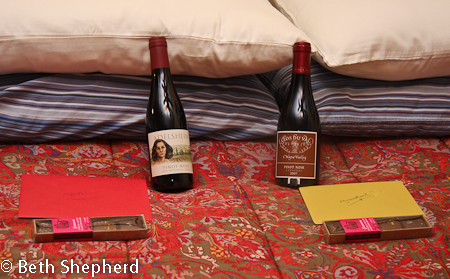
Our trip began on February 14th, Valentine’s Day. When we arrived at Keating House, our B&B for our first three days on the road, Big Papa and I pulled out our Valentine’s gifts for each other and set them on the bed.

Side by side lay two Valentine’s cards, each with a reference to our upcoming whale watching trip, two half-bottles of Pinot Noir wine (Adelsheim and Clos du val) and two boxes of  Theo’s Chocolates! In fact, the exact same chocolates: Theo’s limited version Casanova Caramel Sampler with Ginger Rose, Pink Salted, Honey Saffron and Lavender Jalapeno chocolates.

Wine and chocolate–the perfect way to kick off a much-needed vacation. We sat and sipped and daydreamed about the days that lay ahead.

What can I say? Great minds think alike!

Fish and whale cards

Want to munch on more brilliant tidbits? Check out Wanderfood Wednesday!

Filed Under: Food, Travel Tagged With: Adelsheim Pinot Noir, Baja, Casanova sampler, chocolate, Clos du val Pinot Noir, Pinot, San Diego, Theo's chocolate

Tea for two at the top of the world: Chai

February 8, 2012 by Beth Shepherd

Mt Everest, Tibet, ChinaThere is something about standing at the top of the world that takes your breath away. Maybe it’s the elevation. At 17,000 feet and some change, there’s not a lot of oxygen in the air, particularly if you’re used to living at sea level, like I am.

Or, it could be the view. Not many people are lucky enough to have the opportunity I had: to look the Goddess Mother of the World, Mt. Everest, square in the face. Yet that’s exactly what Big Papa and I did when we visited Tibet in 2008.

Temperatures were in the teens, and there was nothing between us and the mountain of all mountains, except an open plain and a fierce wind. Being in Tibet, and seeing Mt. Everest, was unforgettable.

And so was the tea. Back at the Everest Hotel, we headed for the sole dining room and ordered up a big pot of chai. Sensuous aromas of cinnamon, cardamom, clove, ginger and pepper filled the air. I will never forget my first sip: warmth soothed my cold throat and the flavors were simply irresistible. Big Papa and I joyfully drank the entire pot with ease.

In much of the world, including Asia, Eastern Europe, parts of Africa and Brazil, “chai” means tea. Chai tea, frequently called “Masala Chai,” is an aromatic blend of black or green tea infused with warming spices and typically served with sugar and milk.

If you travel to India, Nepal and Tibet, where chai originated, you’ll likely see vendors peddling the tasty brew on street corners or at train stations. According to Ayurvedic tradition, chai boosts the immune system, enhances metabolism, relieves stress, aids digestion and sharpens the mind. Never mind that it’s also out-of-this-world delicious.

You can find hundreds of chai recipes associated with different locales, restaurants and even families. Preparation methods vary, too—some aficionados insist on boiling the tea, spices and milk together, while others take a gentler approach, briefly steeping the tea leaves and spices in hot water, then adding hot milk and sweetener last.

I still drink chai, though I’ve never had a cup that was as good as the chai we drank while traveling in Tibet. The Goddess Mother of the World had a way with tea. She worked her magic on our chai…and on us.

Teapots, Tingri, Mt Everest, Tibet, ChinaTop of the world [chai] tea for two

• 1½ cups cold water
• One 2-inch piece cinnamon stick, broken
• 2 heaping teaspoons black tea
• Seed of 3 cardamom pods
• One ¼-inch-thick slice fresh ginger
• 3 whole cloves
• 2 black peppercorns
• ¼ to ½ cup milk
• 1 to 2 tablespoons sugar

1. Bring water to a boil in small saucepan. Add cinnamon, cover, remove from heat; steep 2 minutes. Return pan to heat; bring to a boil. Add tea, spices, milk and sugar; cover, and remove from heat. Steep 3 minutes.

2. Pour mixture through fine wire-mesh strainer into warm teapot, discarding solids.

Note: If you prefer, omit the milk and sugar and offer them separately. You can also experiment by adding fennel seeds, coriander seeds, nutmeg, star anise, and lemon or orange peel to create your own unique chai blend.
Beth at Everest Base Camp, Tibet, China Want to take your breath away with more deliciousness? Check out Wanderfood Wednesday!

Filed Under: Food, Travel Tagged With: Base camp, Chai, Everest Hotel, masala chai, Mt. Everest, tea, Tibet

Comfort food: A bowl of soup to honor the memory of a friend

December 20, 2011 by Beth Shepherd

Mushroom Barley SoupToday marks the third anniversary of my friend Dee’s passing, and tonight Joel and I will sit down to enjoy a bowl Moosewood Mushroom Barley Soup in her memory, just as we did last year and the year before that. Making this soup—which Dee and I enjoyed together on many occasions–is my way of honoring our friendship, a friendship which spanned four decades.  For me, keeping up this tradition is a source of comfort.

I miss Dee and think about her a lot. In the three years since she died, there have been many days when I’ve wished I could call and hear the sound of her voice, and when I wrestle with challenges that life sends my way, I sometimes wonder what words of wisdom she might have shared.

Living life without loss isn’t possible–I know that. Granted, some encounter more than others, but loss is something we all must face: loss of those we care about, loss of dreams, even the loss of our own abilities as we age. So the more important question is how do we comfort ourselves? Prayer, meditation, time spent alone or in the company of family and friends, getting away from it all, solace from being in nature or getting lost in the hum of urban life, working out, doing yoga, gardening, walking the dog. Each of us has our own unique way of seeking comfort.

And then there’s comfort food. Whenever I hear those two words rich, hearty fare springs to mind: Mac ‘n cheese, meatloaf, mashed potatoes or apple pie and a bowl of ice cream, or a bowl of steamy soup.

Everything about Moosewood’s Mushroom Barley Soup reminds me of Dee, from the earthy smell of mushrooms which conjures up memories of playing in the woods behind our houses, just across the street from each other– to sharing a meal at Moosewood Restaurant whenever we could scrape up enough change, as Cornell undergraduate students, living in a house together in Ithaca, New York.

But mostly my heart remembers the many times Dee and I made this soup for each other: she for me, me for her, and occasionally side by side. So today I toast to you, my friend—the friendship we had, and everything you brought to the table.

Dee and BethRemember Me

Do not shed tears when I have gone
but smile instead because I have lived.

Do not shut your eyes and pray to God that I’ll come back
but open your eyes and see all that I have left behind.

I know your heart will be empty because you cannot see me
but still I want you to be full of the love we shared.

You can turn your back on tomorrow and live only for yesterday
or you can be happy for tomorrow because of what happened
between us yesterday.

You can remember me and grieve that I have gone
or you can cherish my memory and let it live on.

You can cry and lose yourself become distraught
and turn your back on the world
or you can do what I want – smile, wipe away the tears,
learn to love again and go on.

~David Harkins, British poet

Mushroom Barley Soup from the Moosewood Cookbook

Serves 8

Ingredients

1/2 cup uncooked pearl barley
3 tablespoons butter
1/2-1 teaspoon salt
3-4 tablespoons tamari  or soy sauce
4 tablespoons dry sherry
6-1/2 cups stock or water
1 medium onion, chopped
2 medium cloves garlic, minced
1 lb fresh mushrooms, sliced
fresh ground black pepper

Preparation
Cook barley in 1-1/2 cups of the stock or water in a large saucepan or Dutch oven. Bring to a boil, cover and simmer until barley is tender (20-30 minutes). Add remaining stock or water, tamari and sherry.

Meanwhile, melt the butter in a skillet. Add the onions and garlic. Sauté for about 5 minutes over medium heat. Add mushrooms, and salt. Cover and cook, stirring occasionally, until everything is very tender (about 10-12 minutes).

Add the sauté with all its liquid to the cooked barley. Add fresh ground black pepper to taste and simmer, partially covered, for another 20 minutes. Serve with a slice of hearty bread.

Searching for more comfort?  Check out Wanderfood Wednesday.

Filed Under: Food, Friendship Tagged With: Cornell, Dee, Ithaca, Moosewood, Mushroom Barley Soup, New York

Rudolf and his Reinbeers

December 2, 2011 by Beth Shepherd

Look who we found on our deck, practicing for the big day.

Cheers…’tis the season!

Rudolf and the Reinbeers

Want to look at more photos to help you get into the holiday spirit? Check out Wanderfood Wednesday!


Filed Under: Food, Photography Tagged With: 'Tis the season, beer, reinbeer, reindeer

  • « Previous Page
  • 1
  • …
  • 4
  • 5
  • 6
  • 7
  • 8
  • …
  • 13
  • Next Page »

Some might fend off a mid-life crisis by leaving the comforts of their corporate salary to jet off to a deserted island. Others might buy a Jaguar. I’ve chosen to dive head-long into my 50s and beyond by becoming a first-time parent. At any given moment you might find me holding a camera, a spade, a spatula or a suitcase. Or my little girl's hand. Adopted from Armenia, she puts the Pampers and Paklava into my life.

Subscribe to Blog via Email

Enter your email address to subscribe to this blog and receive notifications of new posts by email.

Recent Posts

  • Ghosts and goblins of Halloweens past
  • Raise a glass—or ten
  • No me without her: A life before motherhood
  • Leaving the orphanage with a priceless pair of tights
  • Rock of ages: Celebrating five years together as a family

Tags

366 Project Adoption anniversary Armenia autumn Bainbridge Island Baja Birds birthday blog cat cats chickadee China Christmas fall ferry flowers France Garden Gyumri Halloween Hawaii Holiday ice cream Kauai leaves London Mamas with Cameras Mexico Mother's Day Mt. Rainier New York orphanage Paris Puget Sound robin Seattle taxi Thanksgiving Tibet USCIS Valentine's Day wedding Yerevan

Categories

  • Adoption
  • Armenia
  • Family
  • Food
  • Friendship
  • Garden
  • Holiday
  • Miscellaneous
  • Paris
  • Photography
  • Recipes
  • Review
  • Seattle
  • Things to do with kids
  • Travel

Sites I like

  • The Wayfaring Voyager
  • Wanderlit
  • Wanderlust and Lipstick
follow us in feedly

Image Copyright

Unless specifically mentioned, all images on my blog are my own original photographs and, therefore, copyright protected (©Beth Shepherd). Feel free to use my images for non-commercial use so long as you provide me with the image credit. Likewise, if you pin my images to Pinterest, please mention me by name.

Copyright © 2026 · Pamperspaklava · WordPress Barista