Pampers and Paklava

  • Home
  • Photography
  • Travel
  • Food
  • Garden
  • Contact

A twist on crisp: Apple-Ginger Crisp Recipe

February 15, 2012 by Beth Shepherd

A week after my father passed away, I came home to find an enormous gift basket filled with an assortment of fruit (a pineapple even!), chocolate, cheese and a few other assorted treats, sent to us by my father’s dear shipmate friend, Sid. The challenge came in finding ways to use it all, but I am always up for a challenge in the kitchen.

Confession: I get a kick out of finding clever ways to combine what we have leftover to concoct something unique and tasty. For me, it’s like putting together a culinary puzzle. So, for the past two weeks, we’ve enjoyed everything from pineapple salsa served with chicken and poblano chiles to today’s apple-ginger crisp.

Using fresh ginger is my twist on classic apple crisp. We had a large piece that needed to find a home, and I enjoy the pungent bite ginger adds to the tartness of the apples and the sweetness from the sugar. I also tweaked the spices by adding a bit of allspice, for an extra kick.

With Seattle’s return to predictable cold and dank February days, after a brief respite of sunshine, the apple-ginger crisp was perfect for warming our bellies. And the smiles on our faces were a testament to the fact that this was a darn good twist on crisp.

apple-ginger crisp


Apple-ginger crisp

  • 4 medium tart cooking apples, sliced or chopped (about 4 cups)
  • ¾-cup packed brown sugar
  • ½-cup all-purpose flour
  • ½-cup old-fashioned oats
  • 1/3-cup butter or margarine, softened
  • ¾-teaspoon ground cinnamon
  • ¾-teaspoon ground nutmeg
  • ½-teaspoon allspice
  • 1-2 inch piece of fresh ginger, peeled and grated (I like mine quite gingery and added a bit more)
  • Fresh cream or ice cream, if desired
  1. Heat oven to 375ºF. Grease bottom and sides of 8-inch square pan with butter or shortening.
  2. Spread apples in pan. In medium bowl, mix together remaining ingredients except cream until well mixed (you can “cut in” the butter with two forks or break into small pieces by hand and mix). Sprinkle over apples.
  3. Bake about 30 minutes or until topping is golden brown and apples are tender when pierced with a fork. Serve warm with a pour of fresh cream or a dollop of ice cream.

Want to discover a new twist on more tasty delights? Check out Wanderfood Wednesday!

Filed Under: Recipes Tagged With: apple-ginger crisp

Patat Frites Recipe

February 1, 2012 by Beth Shepherd

Frites with mayonnaiseThe first time I traveled overseas was for a study-abroad semester in Amsterdam. We arrived in January of 1980, and as we walked along narrow cobbled streets, wind from the North Sea blew frigid air in our faces. Thirty-two years later, I can still conjure up memories of the excitement I felt for the big adventures which lay ahead. And I clearly remember what I saw during my first few days: quaint canals, tall brick buildings with gingerbread roof lines, bikes as far as the eye could see, and tiny plastic pastel-colored forks littering the ground.

What were they for? Why were there so many of them? What did it all mean? And then I discovered ‘Patat frites.’

Patat frites are the Dutch version of fries: long thick cuts of deep-fried potato are stuffed into a paper cone or plastic plate and served up with a dollop of the sauce of your choice…and a plastic fork. In Holland, potatoes are serious business and frites are the number one snack food. It would be impossible to visit Amsterdam without catching a whiff of frying potato wafting from a frite stand. When Big Papa and I visited Amsterdam last year, I made sure we stopped at a few frite stands.

There are several choices for toppings:  light lemony “mayonnaise,” garlic sauce and “patat oorlog” which translates to “war chips.” My personal favorite was “pindasaus” or peanut sauce, a riff on the sauce the Dutch discovered when they colonized Indonesia. Versions of this sauce are served on sate (grilled chicken or meat on a stick) and with Indonesian rijstafel (rice table) cuisine, a food-fest with countless little dishes. You could also serve it over noodles or on top of just about any vegetable dish.

I’ve been thinking a lot about my first overseas trip, how it changed me, opened up my world, and the wanderlust it inspired…even if I’ve never been able to wander as far or as often as I might like. And as I walk down Seattle streets this January, with a bitter wind biting my face and smell of salt air from Puget Sound in my nostrils, I dream about patat frites met pindasaus warming my belly, a heel lekker (which means “completely yummy” in Dutch) treat if there ever was one!

Dutch frites with pindasausPindasaus (Dutch peanut sauce)

4 T peanut butter
8 T hot water
2 t or 1 T Sambal Oelek or to taste (1/2 t or more crushed red pepper is good substitute)
1 T Ketjap Manis or 1 T soy sauce plus 1 t molasses or brown sugar
1 t to 1 T fresh ginger, grated
1 clove garlic, minced
Juice of half a lemon

Combine all the ingredients in a saucepan; gently simmer for 3 to 5 minutes. Stir occasionally.

Note: Sambal Oelek is an Indonesian chile sauce with no added flavors added like garlic or spices. It adds hot without changing the flavor of a dish. A swirl of Sambal Oelek is lovely in a bowl of hummus. Crushed red pepper can be used as a substitute.

Ketjap Manis is Indonesian sweet soy sauce. It is a forerunner of ketchup. It is the only soy sauce developed outside the Asian continent. For a substitute use equal parts soy sauce and brown sugar or molasses. Simmer the two until blended.

Want more lekker treats? Check out Wanderfood Wednesday!
Filed Under: Recipes, Travel Tagged With: Amterdam, frites, Holland, Netherlands, patat frite, pindsaus

My Father’s Sauerkraut Recipe

January 25, 2012 by Beth Shepherd

sauerkrautMy father passed away early Sunday morning. When I shared the news with family and friends, each person I spoke to, talked about my father’s pickles and sauerkraut. Dad was the king of kraut.

Memories of making kraut with my Dad, growing up in Fayetteville, New York, go back as far as I can remember.  My sister and I would help him in his workshop, which was located in the unfinished portion of our basement. In this magical and mysterious spot, lay a treasure trove of wonders: my father’s darkroom, the oak barrel where he made wine, his myriad tools, and all the accoutrement necessary to make pickles and sauerkraut, the way his parents made it in the “old world,” without heat and without vinegar.

We would ball our fat little hands into fists and pound down the grated cabbage into an earthenware crock to release the juices. My eyes would survey the old shelves lining the walls, where Mason jars of green and gold gems stood like a line of soldiers, as they waited for their fermentation period to end.

When they were ready, my father would fetch a jar and, with some effort, unscrew the lid. The pickles and kraut would bubble and hiss before we scooped them out to enjoy with just about any meal my mother prepared. From my father’s perspective pickles and kraut paired with everything!

Dad also delighted in sharing his homemade delicacies. Jars upon jars found their way to the homes of relative and friends. Pickles and kraut were his “signature dishes.” Plus, my father loved to barter. I recall many times when he would use his pickled goods as currency to get a little of this and a little of that.

Even after he suffered a stroke, some 40 years ago, my father continued making pickles and kraut. When we moved him from Florida out to Seattle, and into an assisted living facility, he kept right on making them. In fact, Dave, one of the cooks even scored a few cabbages and spent a couple hours with my father, grating the cabbage and putting it into jars.

Tasting Dad’s wares was also a test of friendship. If you liked his pickles and kraut, he liked you. I think it was all of five minutes into their first meeting, that my father offered Big Papa a sampling of his goodies. I held my breath, hoping it was a “good batch.” Thankfully, it was.

There are a lot of things I will miss about my father. Many of my greatest passions in life come from him: gardening, photography, love of birds and nature. I will most certainly miss his pickles and kraut. Big Papa and I make them, but somehow, ours never seem quite as good as those my Dad made.

Abe’s Kraut

To make sauerkraut at home, you will need:

  • large crock, glass, enamel or food-safe container
  • Five pounds of firm, fresh green cabbage (about 2 heads)
  • Food processor, madoline or cabbage shredder
  • kosher salt
  • a plate or something to cover kraut in crock/container
  • something heavy to weight down the plate
  • wooden spoon (do not use aluminum utensils in kraut making!)

Here’s how:

Shred five pounds of firm, fresh green cabbage (about two heads) in a food processor (you can also use a mandolin and I used the large cabbage grater that my Dad made). It will need to be done in batches. Dump each batch into a large bowl (or a crock if this is what you will ultimately use to ferment the cabbage) as you go, sprinkling with a total of three generous tablespoons of kosher salt, and mix it all together well. You can use a little more or a little less cabbage; just be sure to use a scant two teaspoons of kosher salt per pound of cabbage.

Pack the cabbage and any juices it has released into a crock a little at a time, pressing the cabbage down tightly with your fist as you go. If you don’t have a crock, you can use a food-safe plastic bucket; just be sure you have at least five inches of clearance above the cabbage to allow for foaming/bubbling during fermentation.

Place a clean plate over the cabbage that fits fairly snugly within the opening of the crock or bucket. Place a clean container of water (a large Mason jar works well—it should weigh a minimum of five pounds) on the plate to weight down the cabbage, and throw a clean towel over the top of the crock to keep out any dust.

Check back frequently during the first day to be sure the cabbage is releasing enough juices (the salt will pull water from the cabbage to create brine). Press on the plate/weight if necessary, and/or add more weight if the liquid doesn’t start to cover the top of the cabbage. After about six to eight hours, there should be at least an inch of juice/brine above the plate. If there isn’t, you can top off your cabbage with cooled brine composed of one and a half tablespoons of kosher salt per quart of water.

Store the crock in a spot with a temperature around 70 degrees Fahrenheit—not colder than 65 degrees or hotter than 75 degrees (a basement is ideal). Check it every few days, skimming any scum off the top. The fermentation will cause natural bubbles and foam to form and that’s okay. Rinse the plate and weight off well each time before putting them back. Keep an eye on the brine level; you may have to add more if it’s evaporating. Keep a good inch of brine above the plate as the fermentation proceeds…this is important to prevent unwanted bacteria from forming and the sauerkraut from spoiling!

Start tasting the cabbage after about a week, and ferment it to the level of sourness you like, which will take anywhere from one to four weeks. Some people prefer the milder cabbage-y taste of young kraut, while others like a more fermented flavor.

When the cabbage is fermented to your liking, transfer it and its brine to clean jars, again pressing the kraut down tightly in the jar so the juice rises above. Leave about a half inch of head space, and refrigerate. Your sauerkraut should last a few months refrigerated under brine.

Variation: Add a teaspoon or two of caraway seed for a tasty variation on your kraut. My father used to do this on occasion with a batch or two, and I quite liked it.

Beth and Abe
In memory of my father, Abe: March, 1924-January 22, 2012.

I know you’re up there making kraut like they’ve never tasted before!


Want more old-school flavor? Check out Wanderfood Wednesday.

Filed Under: Recipes Tagged With: dad, Fayetteville, kraut, pickles, sauerkraut

Hot chocolate recipe for a cold day

January 18, 2012 by Beth Shepherd

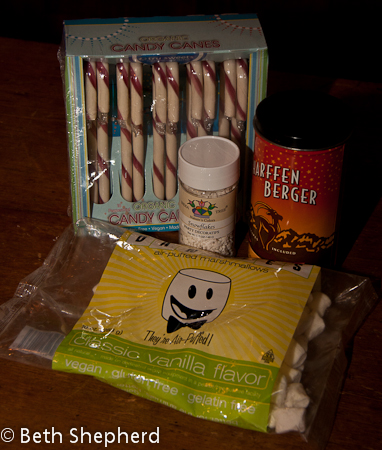
Snowmageddon hot chocolate In anticipation of the “megastorm,”  Seattle’s blizzard of 2012, lines wrapped around the corner at the checkout counter in the grocery store, cars jostled for non-existent parking spaces, and customers had that scared-as-a-rabbit-caught-in-the-crosshairs look in their eyes. Far be it from me to taunt Mother Nature particularly when weatherman uses terms like “worst blizzard in decades” in his forecast. Like everyone else, I filled my cart with all the goodies one might desire while snowbound in Seattle for a couple days. As I drove home, peeking out of the top of my shopping bag, were a couple of extra snazzy ingredients that will find their way into a steaming cup or two of hot chocolate.

Hot chocolate is high on my list of cold weather comfort food and drink classics, and when snow is in the forecast, you just can’t go wrong with a beefed up mug of creamy, chocolaty goodness. There are an infinite number of ways one can prepare this drink, and I confess it’s hard to narrow it all down into one post.

First I should point out that hot cocoa and hot chocolate are a wee bit different from one another: hot cocoa is made from cocoa powder, whereas hot chocolate is made with melted chocolate. I like both, and each has its time and place.  Convenient instant cocoa in a packet is great for those moments when you have to have a cuppa cocoa—now, and DIY hot chocolate made from a chocolate bar is for those days when you’ve got nothing but time on your hands, time to sit and watch the snow fall. Of course, there’s a huge range of possibilities in between.

SnowmyGod! Our hot chocolate was one tricked out bowl of decadence, befitting the “significant weather event” that is Seattle Snowpocalypse 2012. I served it soup-style, with a Nirvana chocolate snowman who stood proudly, albeit briefly, in the middle. The second the hot cocoa landed in the bowl, he fell face down and immediately melted. He was surrounded by a flurry of mini-marshmallows, a sprinkling of candy snowflakes, and a candy cane stir stick. Bonus: I scored the tru sweets organic candy canes and snowmen for a post-holiday (and pre-snowstorm) 75%-off steal! And I suppose I should also fess up to the splash or two of Rumple Minze liquor that found its way into the mix.

Snowzilla’s not going to scare me, at least not while I’m sittin’ tight and sippin’ cocoa. Let it snow, let it snow, let it snow.

To get you started, two recipes follow. I’ve also offered up several creative variations on the theme, including clever toppings and mix-ins to customize your cocoa that will thrill both children and adults alike.

Seattle snowmageddon hot chocolate

Hot Cocoa Recipe (serves 4)

  • 1/2 cup sugar
  • 1/4-1/3 cup unsweetened cocoa powder (use good quality cocoa like Scharffen Berger or Droste)
  • 1/8 teaspoon salt
  • 1/3 cup half and half
  • 4 cups whole milk
  • Whipped Cream or mini-marshmallows…or other topping
  1. Stir together sugar, cocoa and salt in medium saucepan; add half and half.
  2. Cook over medium heat, stirring constantly, until mixture comes to a boil.
  3. Simmer 1-2 minutes, stirring constantly.
  4. Add milk; stirring constantly, heat to desired serving temperature. Do NOT let the milk boil.
  5. Remove cocoa from heat; whisk or beat until frothy. Top with whipped cream or marshmallows.

Hot Chocolate Recipe (serves 4)

  • 1 quart half-and-half or whole milk
  • 8 ounces bittersweet or semisweet chocolate, finely chopped
  • 4 ounces milk chocolate, finely chopped
  • tiny pinch of salt
  • 1/2 teaspoon ground cinnamon
  1. Warm about one-third of the half-and-half or milk, with the chopped chocolates and salt, stirring until the chocolate is melted.
  2. Whisk in the remaining half-and-half or milk, heating until the mixture is warmed through. Add the cinnamon.
  3. Use a hand-held blender, or a whisk, and mix the hot chocolate until it’s completely smooth. Serve very warm

Variations:

  • Got milk? You can make your hot cocoa/chocolate with water but it will be much richer and tastier with milk. It doesn’t have to be whole milk (but, heck, live it up once in awhile!) and, depending on your dairy tolerance, you can make your cocoa with soy, almond or rice milk. And I’ve heard of at least one person who likes to spike hers with Eggnog over the holidays.
  • Chocolate fix? You can chop the chocolate with a good chef’s knife, grate it with a microplane or a handheld box grater, or use chocolate chips or the mini-cooking disks that can be found in many grocery stores or cooking stores. Or you can make your hot chocolate with round Mexican chocolate disks (some of which are also flavored with cinnamon, chile or vanilla) Of course there are infinite possibilities for the chocolate you use.
  • Add-ins? How about melting a spoonful of creamy peanut butter or Nutella, tossing in a tablespoon of butterscotch chips or crushed peppermint candies, plopping on a dollop of whipped cream or a drizzle of chocolate, caramel or even maple syrup, or sprinkling an array of colored sugar crystals (I used India Tree Gourmet Spices Snowflakes), mini-M&Ms or crushed toffee bits over the top. Another nifty winter warmer idea is to add a dusting of cinnamon and hot pepper.
  • Stir sticks? Try cinnamon sticks, chocolate coated spoons, flavored straws or oh-so-classic candy canes.
  • Don’t forget marshmallows. You can buy the standard mallow puffs which, these days, can also be found in groovy shapes and flavors like French vanilla snowmen. Or you can scout out vegan marshmallows (like the Dandies brand I bought at Central Co-op/Madison Market). And, you can even make your own.
  • Want a little adult kick in your cocoa? Try adding a shot of espresso or flavored liquor such as Amaretto, Kahlua, Bailey’s, Grand Marnier or anything minty will take your drink up a notch.

Want a flurry of more deliciousness? Check out Wanderfood Wednesday.

Filed Under: Recipes Tagged With: blizzard, Central Co-op, Dandies marshmallows, Droste, India Tree Gourmet Spices, liquer, Madison Market, Megastorm, Nirvana Chocolate, Rumple Minze, Scharffen Berger, Snowmageddon, Snowpocalypse, Snowzilla, tru sweets

Hippie Popcorn: Popcorn with Nutritional Yeast

January 11, 2012 by Beth Shepherd

Nutritional yeast My writing group and our neighborhood ‘Mom’s Night Out’ group both meet at the Central Cinema, a small indie film and dinner joint that happens to be conveniently located just around the corner from where I live. You can watch a flick while filling your tummy with a lovely selection of homemade pizzas, salads, soups, desserts, wine and beer…or you can hang out in the café and just eat and chat.

The Cinema is a fun place to rendezvous with friends. But truth be told, the main reason we always go there boils down to one thing: popcorn with “brewer’s yeast.”*

Oh take me back to my college  days during the late 1970s, in Ithaca, New York, where I was first introduced to the hippie way of making popcorn with nutritional or brewer’s yeast. I lived in a “co-op,”  hippie speak for a household where we shared in the cooking and household chores. Many nights, after dinner, we’d pop a batch of popcorn, sprinkle it with yeast and sit together on the couch to watch a movie or just shoot the breeze. The nutty flavor and cheesy texture is out of this world, and I love how the yeast floats like a yellow cloud atop my bowl of crunchy popcorn goodness.

*First a disclaimer: nutritional yeast and Brewer’s yeast are not the same thing, though you can (and I have) use either on popcorn or other foods. Personally, I like the flavor and texture of nutritional yeast tastes better; Brewer’s yeast comes off as a bit bitter to my taste buds.

Second: don’t confuse nutritional yeast, which is deactivated, with active forms of yeast, like the kind of yeasts bakers, winemakers and beer makers (who, yes, use a “brewer’s yeast but it’s an activated rather than deactivated type of yeast) use.  Whereas nutritional yeast is actually good for you, these other yeasts are not and can even rob your body of nutrients.

Back to the yeast you DO want to use: Nutritional yeast has a pleasant nutty-cheesy flavor and is packed with protein and B vitamins.  It comes in flakes or powder and is popular with vegans and health buffs who use it to make cheese substitutes, gravies, and many other dishes.  And, as I’ve mentioned, it’s also a great topping for popcorn.

Brewer’s yeast, which is also used as a nutritional supplement, is made from the same strain of yeast as nutritional yeast.  The difference is that brewer’s yeast is a by-product of beer production and retains some of the bitter flavor of hops.  It is more granular in texture and darker in color.  You can find both types of yeast at most health food grocery stores.

Aside from tasting delicious, nutritional yeast is…well, nutritious. It is a powerhouse of B-vitamins, including B-12, and it is also rich in folic acid, amino acids and 15 minerals including iron, magnesium, phorphorus, zinc, and chromium, and selenium. B-vitamins are helpful for stress reduction and sleep. Minerals such as chromium assist in regulating regulate sugar which is important for diabetics and people with a tendency toward low blood sugar. Plus, nutritional yeast also contains a high amount of fiber, which eliminates constipation, assists in lowering cholesterol, reduces the risk of colon disease, and protects against high blood pressure, heart disease and diabetes.

These are all valid reasons to sprinkle a healthy dusting of yeast on your popcorn. But mostly I like it because it tastes so darn good, addictive in fact. It is so yummy that once I munch my first mouthful, I simply cannot–stop–myself.

Popcorn with Brewer's yeast Popcorn with Nutritional Yeast

Ingredients

  • Popcorn
  • Oil
  • Nutritional Yeast (I use Red Star) or Brewer’s Yeast (both can be found at most health-food grocery stores, Whole Foods, etc.)
  • Salt (I use kosher salt)
  • Butter or similar substitute

How to:

  1. Drizzle about 4 tablespoons of vegetable oil in a large, heavy pot
  2. Add about 1/2 cup of popcorn kernels
  3. Raise the heat to high until you hear the oil start to sizzle.
  4. Cover the pot with a lid and use potholders to lift it and shake it over the heat (you don’t want the bottom to burn).
  5. Resist the urge to lift the lid to see if it’s popping — you’re likely to get hit with a flying kernel.
  6. Listen for the pop-pop-popping to slow down and then remove the pan from the heat, leaving it covered for another minute.
  7. While the pop corn is popping, melt a little butter, margarine or soy butter melting in pan. Pour the popcorn into a big bowl; drizzle with the melted butter or margarine; sprinkle with kosher salt and lots and lots of nutritional yeast.

That’s all there is to it. Munch away. Just remember that it’s nearly impossible to stop. Please don’t say I didn’t warn you.

Want more deliciousness popping in your life? Check out Wanderfood Wednesday!

Filed Under: Recipes Tagged With: Brewer's yeast, Central Cinema, Ithaca, Mom's Night Out, Nutritional yeast, popcorn, Red Star Yeast

Pomegranate Spritzer Recipe

January 4, 2012 by Beth Shepherd

Pomegranate and Revah Pomegranate WineBig Papa and I kicked off 2012 with a bit of bubbly, a special creation I concocted to welcome the New Year. I filled our glasses half-way with Cava, topped them off with a semi-sweet pomegranate wine from Armenia that I picked up this past summer at our favorite wine shop, and floated a few pomegranate seeds on top. Then we lifted our glasses, clinked them together, and toasted to happiness and good fortune in the coming year.

I love pomegranates with their ruby-red seeds that shine like jewels when the fruit is cut open. The name pomegranate derives from Middle French, pomme garnete, literally “seeded apple”; it is sometimes referred to as a Chinese apple. Many scholars also believe that the forbidden, yet irresistible fruit that Eve indulged in from the Garden of Eden was actually a pomegranate (and not an apple).

Pomegranates are also said to represent good luck because of their bright red color, which is thought to denote life and fertility. In many cultures, pomegranates are prominently featured during the winter holiday season and into the new year.  The fruit’s beneficial medicinal properties are often touted in health and cooking magazines. And the abundant seeds represent prosperity. Cheers to that!

Pomegranate Spritzer


Ingredients

  • Bubbly (Cava, Prosecco or champagne)
  • Pomegranate wine (or pomegranate juice like POM, in which case fill ¾ with bubbly)
  • Pomegranate seeds

How to:

Fill a glass half-way with bubbly, top off with pomegranate wine (or juice). Float pomegranate seeds on top. Start sipping!

Come on-a my house my house, I’m gonna give you Christmas tree
Come on-a my house, my house, I’m gonna give you
Marriage ring and a pomegranate too ah

~Rosemary Clooney, Come on a my house

Want to launch your New Year with more deliciousness? Check out Wanderfood Wednesday!

Filed Under: Holiday, Recipes Tagged With: 12th and Olive Wine, New Year, POM Wonderful, pomegranate, Proshyan Brandy Factory, Reva Pomegranate Wine, ReVah Pomegranate Wine

Cinnamon-Clove Ice Cream Recipe

December 28, 2011 by Beth Shepherd

cinnamon-cloveHow is it possible that I haven’t yet posted the recipe for Big Papa’s favorite homemade ice cream: Cinnamon-Clove? In my admittedly biased opinion, these two spices are quintessentially winter. That’s why Cinnamon-Clove Ice Cream is THE ice cream to make over the holiday season.

On Sunday, we brought Cinnamon-Clove Ice Cream to accompany the delicious mincemeat pie our friends made for the Christmas dinner they hosted. You could also pair this ice cream alongside fresh apple or pumpkin pie, gingerbread, a pear tart or simply enjoy it on its own.

Whenever I make a batch, I always let Big Papa act as my taste tester. Inevitably, he says the same thing each time—albeit with a sly smile on his face: “It’s terrible. Don’t serve it to our guests. I’ll have to eat it myself.” Of course as long as I’m the chef in the house he’s out of luck, because he’s going to have to share it with me!

Cinnamon-Clove Ice Cream

Ingredients

  • 2 cups whole milk
  • 2 cups whipping cream
  • 1 cup sugar
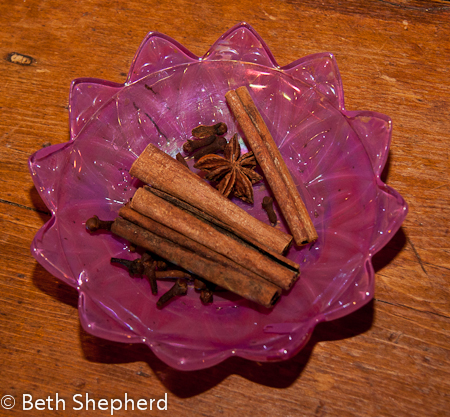
  • 6 whole cinnamon sticks
  • 16 whole cloves, slightly crushed
  • Optional: 1-2 Star anise (this is something I like to add, but the ice cream is equally tasty without it)
  • 8 large egg yolks (sometimes I use a couple less)

How to

Combine milk, cream, 1/2 cup sugar, cinnamon and cloves in heavy medium saucepan. Bring to boil over medium-high heat, stirring until sugar dissolves. Remove from heat. Cover and steep 1 hour (sometimes I let it steep a bit longer for more intense flavor).

Whisk yolks and 1/2 cup sugar in bowl until well blended. Bring milk mixture to simmer. Gradually whisk hot milk mixture into yolk mixture; return to same pan. Stir over medium-low heat until custard thickens and leaves path on back of spoon when finger is drawn across (do not boil). Strain into another medium bowl; chill uncovered until cold, stirring occasionally, about 2 hours. Note: After I strain the custard, I like to wash off the “spent” spices, air dry them and then toss them into a jar and cover them with sugar. After a couple weeks, the spices flavor the sugar which I use to add a warm kick to espresso, homemade hot cocoa and other recipes.

Process chilled custard in ice cream maker according to manufacturer’s instructions. Transfer ice cream to container; cover and freeze. The ice cream can be prepared 3 days ahead. Keep frozen.

Want to spice up your life with more deliciousness? Check out Wanderfood Wednesday!

Filed Under: Recipes Tagged With: Cinnamon, Cinnamon-Clove Ice Cream, Clove, Star Anise

Pear-Riesling Sorbet Recipe

December 14, 2011 by Beth Shepherd

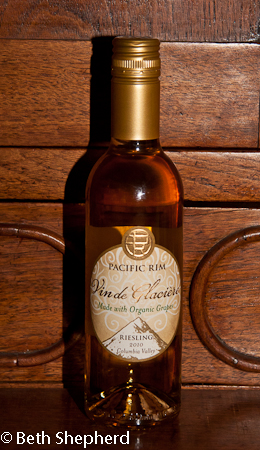
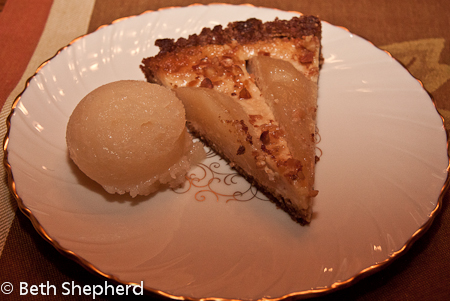
Pacific Rim Late Harvest RieslingOn the first day of Christmas my true love gave to me, a Riesling in a pear tree. Actually, I gave this gift to him, in the form of Pear-Riesling sorbet. Sweet notes of candied apricot, pear, green tea and orange blossom mingled with fresh pear. Iced and refreshing, our sorbet “peared” perfectly with the delicious Pear Tart our friend Greg brought for dessert.

Pear-Riesling Sorbet couldn’t be easier to make. If you don’t have an ice cream maker, here’s what you do:  chill the ingredients in the freezer periodically (every hour or so) check back and stir in the frozen edges, until it is frozen and ready. Sorbet made this way will take longer (about 5 hours), but it works. Also note that sorbet (and ice cream) made at home is always softer than store-bought versions and, when served, melts more quickly.

You’ll find that one bottle of late harvest Riesling (I used Pacific Rim Vin de Glaciere) generally provides enough wine to make this recipe once, with enough left over for an aperitif for two…perfect with a strong cheese like Roquefort or aged cheddar. Just the thing to enjoy as you search for five golden rings!

Pear-Riesling Sorbet

  • 1-1/4 cup Riesling (my choice was a late harvest dessert Riesling)
  • 1/2 cup sugar
  • 4 very ripe pears, peeled and cored (I used a combination of pear types but you could easily just select your favorite)
  • Juice from one-half lemon

How to:

  1. Combine pears, 3/4 cup wine, and 1/4 cup sugar in a saucepan and cook until the pears are tender, but have not developed any color.
  2. Pour the pear mixture into a blender with remaining ingredients (. Puree until smooth. Chill overnight.
  3. Churn in your ice cream maker.
  4. Let it chill in freezer a bit.
  5. Enjoy!

Pear-Riesling sorbet and pear tart

When the weather outside is frightful, indulge in something more delightful. Check out Wanderfood Wednesday!

Filed Under: Recipes Tagged With: Late Harvest Riesling, Pacific Rim Vin de Glaciere Riesling, pear, Riesling-Pear Sorbet

Turkey Leek Risotto Recipe

December 7, 2011 by Beth Shepherd

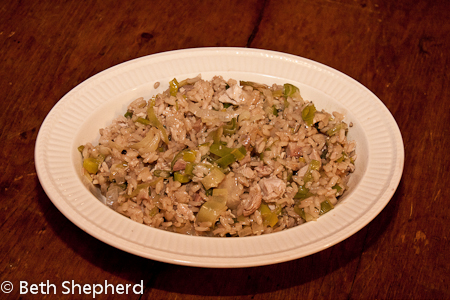
Turkey Leek RisottoThanksgiving has a few time honored traditions for those of us who cook a turkey: first, you eat your turkey. Next, you have seconds. Later, you wrap up all the turkey leftovers. Then, for the remainder of the week, or for as long as you can mentally gear up, you make turkey sandwiches for lunch, and turkey soup and casserole for dinner.

It doesn’t take long before you’re wailing: That’s it. I’ve had it with turkey leftovers. And then, miraculously, Thanksgiving slips from memory as you head into the rest of the holiday season. A blissful eleven months pass, thoughts of turkey forgotten, until Thanksgiving rears its once-a-year head again.

I’ve been in this boat. But this year I discovered a recipe for Turkey Leek Risotto.

I made it. Big Papa and I ate it. And I’ll be danged if there wasn’t a tear in my eye when we polished off the leftovers from the Turkey Leek Risotto made with our Thanksgiving turkey leftovers.

Trust me. After you finish your last bite of Turkey Leek Risotto, you’ll do two things:

  1. Kiss the freezer where you’ve kept a few cups of frozen turkey stock (yes, yes…that stock recipe I was pimping last week!)
  2. Rue the day you tossed the last of the leftover turkey and said: That’s it. I’ve had it with turkey leftovers!

Turkey Leek Risotto and Delicata squashTurkey Leek Risotto

Note: I served my risotto with Delicata squash (which I baked in the oven with a bit of butter, brown sugar and fresh sage.

Ingredients

  • 5 1/2 cups Turkey Stock (okay, if you don’t have homemade, you can buy it at the store)
  • 1 tablespoon butter, divided
  • 2 teaspoons olive oil, divided
  • 3 cups thinly sliced leek (about 3 large)
  • 3/4 teaspoon salt, divided
  • 1/4 cup finely chopped shallots
  • 1 1/2 cups uncooked Arborio rice or other short-grain rice
  • 1/2 cup dry white wine (I used a dry sherry)
  • 2 cups chopped cooked turkey (light and dark meat)
  • 1/3 cup grated fresh pecorino Romano cheese
  • 1 1/2 tablespoons chopped fresh thyme
  • 1 tablespoon chopped fresh sage
  • 1/4 teaspoon freshly ground black pepper

How to:

Bring Turkey Stock to a simmer in a medium saucepan (do not boil). Keep warm over low heat.

Melt 1 teaspoon butter and 1 teaspoon oil in a large saucepan over medium heat. Add leek to pan; cook 7 minutes or until tender, stirring occasionally. Stir in 1/4 teaspoon salt. Place leek mixture in a small bowl. Melt remaining 2 teaspoons butter and remaining 1 teaspoon oil in pan. Add shallots to pan; cook 2 minutes or until tender, stirring occasionally. Add rice; cook 2 minutes, stirring constantly. Stir in wine; cook 1 minute or until liquid is nearly absorbed, stirring constantly. Stir in 1/2 cup stock and 1/4 teaspoon salt; cook until liquid is nearly absorbed, stirring constantly. Add remaining stock, 1/2 cup at a time, stirring constantly until each portion of the stock is absorbed before adding the next (about 28 minutes total).

Stir in turkey and leek mixture; cook 1 minute or until thoroughly heated. Remove from heat; stir in remaining 1/4 teaspoon salt, pecorino Romano cheese, thyme, sage, and pepper.

Want more deliciousness that’s not leftover? Check out Wanderfood Wednesday!

Filed Under: Recipes Tagged With: leftovers, Thanksgiving, turkey, turkey leek risotto

Stock up! Four tips and four tricks for making great turkey stock

November 30, 2011 by Beth Shepherd

Turkey StockBig Papa headed off to work with his turkey sandwich today, just like he’s done every day since we grilled our post-Thanksgiving turkey this past Saturday. I’m sure some of you, or at least those who eat turkey, have been scouring the internet looking for turkey leftover recipes. But, have you considered what to do with your turkey carcass, other than toss it in the garbage?  I say, make turkey stock! If you don’t, you are missing out. Making stock is one of the best ways to use what’s left from your turkey. Plus, you’ll collect bonus points for stretching your precious food dollars even farther.

At this very moment I’ve got turkey vegetable soup, made with homemade stock, simmering on our stove. The kitchen smells amazing and I can’t wait to serve up our soup. I also plan to try a recipe I found for turkey-leek risotto.

How about you? What would you do with turkey stock?

turkey stockTurkey Stock Recipe (Makes ~10 cups)

Note: You can use this recipe with a chicken carcass too.

Ingredients

  • 1 turkey carcass (with meat picked off, chopped and reserved)
  • ~10 cups water
  • TIP! Use 2 cups dry white wine for a nice rich flavor. It’s optional–if you don’t use white wine, add more water.
  • TRICK! (Thank you Auntie Kate) Save cooking scraps in Ziploc freezer bags. Onion skins, raw potato skins, raw or roasted sweet potato or yam skins, apple cores, bell pepper seeds and stems, leek ends, spinach or collard stems, wilted but not rotten veggies from the fridge are all candidates for stock.
  • Note: Do not ever use table scraps in stock. Ever. Use only cooking scraps.
  • Note: Citrus, melon and squash rinds don’t work well in stock because they are too bitter when cooked.
  • 1-2 carrots, cut into large chunks
  • TIP! Chopped fennel bulb can be used in place of the oft recommended 2 stalks of chopped celery. I personally love the slight anise flavor. Again, large chunks.
  • TRICK! Leave the skin on when you cut 1 onion into quarters
  • 3-4 whole garlic cloves
  • 1 handful fresh parsley
  • Tablespoon of whole peppercorns
  • Handful of fresh or dried thyme
  • 2 bay leaves
  • Salt and pepper to taste


How to:

Place your turkey carcass in a very large pot, breaking the bones into smaller pieces if necessary so that it will fit.  Cover with white wine and water. Turn the burner on to medium heat.  Add veggie scraps, carrots, onion, fennel or celery and garlic.

Just before water starts to boil turn the heat down to low.  Use a spoon to scrape off any scum that rises to the surface (also little bubbles). These are all fat and other impurities and if you skim them off then your stock will be clear and even more divine.  Let the stock simmer for 1 to 1-1/2 hours, checking periodically to skim off any scum.  Add parsley and bay leaves and simmer for another 1 to 1-1/2 hours.

Use tongs to remove and discard the carcass.  Pour stock through a fine mesh strainer into a large bowl or Tupperware (TRICK! Do this in the sink in case there is spillage), and season with salt and pepper, to taste.

Stock keeps two weeks in the refrigerator and several months (up to six) in the freezer.  TIP! Freeze stock in 2-4 cup portions so you only have to thaw out small amounts to use for your recipes…much easier than trying to chop off a chunk of frozen stock (not that I have done this, mind you). TRICK! When reusing stock reserved in the refrigerator or thawed stock, pour through fine mesh strainer again to remove any fat that congeals at the surface.

Bonus TIP! (Thanks again, Auntie Kate) For even more flavorful stock, before you do anything else, heat ½ cup of water in a large, heavy stock pot, on high or med-high. Chop the onion into dime-sized pieces.

Put the onions into the hot water and spread them out across the pot with a wooden spoon. Allow the liquid to cook away, and watch closely to avoid burning. When the bottom of the pot is turning brown and the onions are sticking, pour in the rest of the water (and wine if using wine) and scrape the brown from the bottom of the pan. This gives the stock a depth and savory-sweetness you won’t get if you skip this step.

Hope everyone had a delicious Thanksgiving. Happy stock-making!

For more yummy tips and tricks, check out Wanderfood Wednesday!
Filed Under: Recipes Tagged With: soup, stock, Thanksgiving, turkey

  • « Previous Page
  • 1
  • 2
  • 3
  • 4
  • 5
  • 6
  • Next Page »

Some might fend off a mid-life crisis by leaving the comforts of their corporate salary to jet off to a deserted island. Others might buy a Jaguar. I’ve chosen to dive head-long into my 50s and beyond by becoming a first-time parent. At any given moment you might find me holding a camera, a spade, a spatula or a suitcase. Or my little girl's hand. Adopted from Armenia, she puts the Pampers and Paklava into my life.

Subscribe to Blog via Email

Enter your email address to subscribe to this blog and receive notifications of new posts by email.

Recent Posts

  • Ghosts and goblins of Halloweens past
  • Raise a glass—or ten
  • No me without her: A life before motherhood
  • Leaving the orphanage with a priceless pair of tights
  • Rock of ages: Celebrating five years together as a family

Tags

366 Project Adoption anniversary Armenia autumn Bainbridge Island Baja Birds birthday blog cat cats chickadee China Christmas fall ferry flowers France Garden Gyumri Halloween Hawaii Holiday ice cream Kauai leaves London Mamas with Cameras Mexico Mother's Day Mt. Rainier New York orphanage Paris Puget Sound robin Seattle taxi Thanksgiving Tibet USCIS Valentine's Day wedding Yerevan

Categories

  • Adoption
  • Armenia
  • Family
  • Food
  • Friendship
  • Garden
  • Holiday
  • Miscellaneous
  • Paris
  • Photography
  • Recipes
  • Review
  • Seattle
  • Things to do with kids
  • Travel

Sites I like

  • The Wayfaring Voyager
  • Wanderlit
  • Wanderlust and Lipstick
follow us in feedly

Image Copyright

Unless specifically mentioned, all images on my blog are my own original photographs and, therefore, copyright protected (©Beth Shepherd). Feel free to use my images for non-commercial use so long as you provide me with the image credit. Likewise, if you pin my images to Pinterest, please mention me by name.

Copyright © 2026 · Pamperspaklava · WordPress Barista