Pampers and Paklava

  • Home
  • Photography
  • Travel
  • Food
  • Garden
  • Contact

St. Paddy’s Potatoes: How to grow container potatoes

March 10, 2016 by Beth Shepherd

Have a small garden? Maybe just a sunny porch? Love potatoes? If you are a small space gardener, like I am, growing potatoes in a container is the way to go! Tupperware bin or even a burlap bag, it’s easy to grow your own spuds. I like to grown mine in big garbage bins!

Container potatoes

You’ll want to start your plants after all danger of frost has passed. I live in the Seattle and the climate is somewhat mild, so St. Patrick’s Day is when I plant. Yes, I admit there’s a twisted irony to planting potatoes on St. Paddy’s because, well, there was that potato famine. But for me it’s a good reminder: St. Paddy’s—->Irish potato famine—>plant potatoes.

Want to try it? Start with seed potatoes, not the leftovers from Sunday’s dinner. You can buy them at most garden stores and they are preferred because there is less chance of disease (again see Potato Famine).

Select a potato variety that works with your growing season. There are three basic categories: early, mid and late season.  You can find suggestions on which varieties to try, based on your growing season, in this great article about potato varieties. This year I’m growing Germain Butterballs and Ozettes. German Butterball potatoes are tender and, like their name, buttery. The flavorful, but lumpy, Ozette potato is our local star. Brought to the Pacific Northwest from Peru by Spanish galleons. Even if they won’t win any awards for beauty, I love their rich, nutty flavor!

Small seed potatoes can be planted whole, but cut larger ones into 2-inch pieces, making sure there are several eyes on each piece. Plant the pieces in your container-of-choice by placing them about 5-7 inches apart on about 4-inches of  free-draining soil mixture with a small handful of fertilizer added in.

Cover your potatoes with more soil and then, after the plants grow about 6-inches, continue to cover the them until you reach the top of your container. You have to do this somewhat carefully, in my opinion, so as not to break the newly growing plants. You’ll want to keep your plants watered but don’t over-water lest you end up with soggy plants. Also, be sure to cut or drill holes for drainage into your container if it didn’t ‘t come with drainage holes to begin with.

For best results, place your container where the plants will get six to eight hours of light and temperatures of around 60 degrees Fahrenheit. You’ll know it’s time to harvest when your plants flower and then turn yellow. You can also remove new potatoes before flowering. Once the stems turn yellow, stop watering and wait a week.
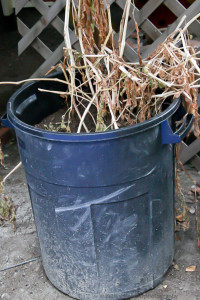
Yellow and dry potato plants

Dig out the potatoes or just dump the container and sort through the soil for the tubers. Brush dirt off the potatoes (but don’t wash them in water until you’re ready to eat them) and let them “cure” for two weeks in a cool, dark spot (like a basement). Our family has a great time at our annual “potato dumping.” We haul out a tarp and tip over the cans. It’s great fun for little kids to dig around in the dirt, collect and count their haul.

Potato harvesting

Important note: You can reuse potato soil in your garden, just NOT in vegetable beds (flowers and other plants are okay). This is because they are in the nightshade family (like tomatoes) and the spent soil is more likely to cause disease in other vegetables, if you use it again.

Container potatoes

Go forth–plant potatoes! And Happy St. Paddy’s.

It’s all about the journey,

Beth
Filed Under: Holiday Tagged With: potato, potatoes, St. Patrick's Day

Sweet Potato and Leek Potage Parmentier Recipe

January 22, 2014 by Beth Shepherd

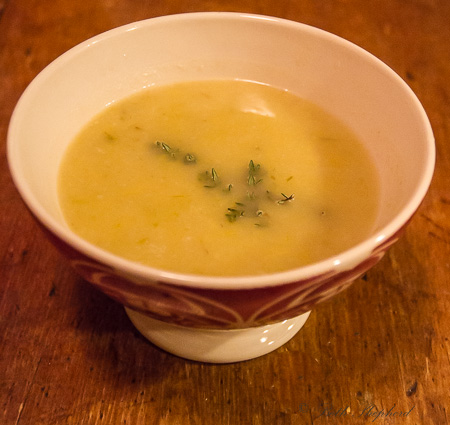
Sweet potato and leek soup

On a cold day (of which, lately, there have been many), there are few things more satisfying than Potage Parmentier. The classic potage (thick soup) is made with potatoes and leeks.

Potage Parmentier was named after Auguste-Antoine Parmentier, and is the moniker used for the hot version of the soup sometimes mistakenly called Vichyssoise (named after the spa town of Vichy), a name that should be used for the cold version of the soup. Soup temperature aside, there is another difference between the two soups: vichyssoise is a smooth and creamy soup, whereas parmentier can either be a rustic, chunky broth (with or without milk), or a rich and silky cream soup.

Whenever I think of potatoes and leeks together, I think of France. Ironically, if not for Parmentier, the potato may have never found acclaim there. Here’s a bit more history (Wiki version) about how Parmentier managed to convince France to open their hearts to the humble “pomme de terre” (apple of the earth):

While serving as an army pharmacist for France in the Seven Years’ War, he was captured by the Prussians, and in prison in Prussia was faced with eating potatoes, known to the French only as hog feed. The potato had been introduced to Europe as early as 1640, but (outside of Ireland) was usually used for animal feed. King Frederick II of Prussia had required peasants to cultivate the plants under severe penalties and had provided them cuttings. In 1748 the French Parliament had actually forbidden the cultivation of the potato (on the ground that it was thought to cause leprosy among other things), and this law remained on the books in Parmentier’s time.

From his return to Paris in 1763 he pursued his pioneering studies in nutritional chemistry. His prison experience came to mind in 1772 when he proposed (in a contest sponsored by the Academy of Besançon) use of the potato as a source of nourishment for dysenteric patients. He won the prize on behalf of the potato in 1773.

Thanks largely to Parmentier’s efforts, the Paris Faculty of Medicine declared potatoes edible in 1772. Still, resistance continued, and Parmentier was prevented from using his test garden at the Invalides hospital, where he was pharmacist, by the religious community that owned the land, whose complaints resulted in the suppression of Parmentier’s post at the Invalides.

Parmentier therefore began a series of publicity stunts for which he remains notable today, hosting dinners at which potato dishes featured prominently and guests included luminaries such as Benjamin Franklin and Antoine Lavoisier, giving bouquets of potato blossoms to the King and Queen, and surrounding his potato patch at Sablons with armed guards to suggest valuable goods — then instructed them to accept any and all bribes from civilians and withdrawing them at night so the greedy crowd could “steal” the potatoes. (These 54 arpents of impoverished ground near Neuilly, west of Paris, had been allotted him by order of Louis XVI in 1787).

The first step in the acceptance of the potato in French society was a year of bad harvests, 1785, when the scorned potatoes staved off famine in the north of France. The final step may have been the siege of the first Paris Commune in 1795, during which potatoes were grown on a large scale, even in the Tuileries Gardens, to reduce the famine caused by the siege.
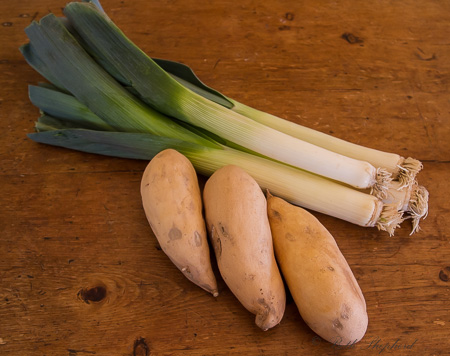
My Sweet Potato and Leek Potage Parmentier is a riff on the timeless class. Aside from their delicious, slightly sweet flavor, sweet potatoes have many health benefits. They are high in vitamin B-6, calcium, vitamin D, iron and magnesium. And, did I mention how easy this soup is to make? Five ingredients (including the stock, salt and cream).


Fresh sweet potatos and leeks

Sweet Potato Leek Potage Parmentier Recipe

Serves: 6 – 8
Adapted from Julia Child’s Potato Leek Potage Parmentier
Ingredients
  • 3 to 4 cups, or 1 lb, peeled, sweet potatoes, sliced or diced (you could substitute yams, but the soup will be sweeter)
  • 3 cups or 1 lb thinly sliced leeks including the tender green; or yellow onions (but leeks are SO much better)
  • 2 quarts of water or stock
  • 1 T salt
  • 4 to 6 T whipping cream, half-and-half, milk (depending on how rich you want your soup); or, 2 to 3 Tb softened butter
  • 2 to 3 T minced thyme (the classic herbs used are chives or parsley)
Instructions
  1. Clean and dry leeks (which are famous for hiding bits of dirt and sand).
  2. Simmer the sweet potatoes, leeks, water, and salt together, partially covered, for 40 to 50 minutes until the vegetables are tender; or, cook in a pressure cooker, under 15 pounds pressure for 5 minutes, release pressure, and simmer uncovered for 15 minutes.
  3. Mash the vegetables in the soup with a fork, or pass the soup through a food mill (you can also use a blender or a hand blender, but the soup will turn out smoother with a food mill).
  4. Set aside uncovered until just before serving, then reheat to the simmer.
  5. Turn off heat and, just before serving, stir in the cream or butter by spoonfuls.
  6. Pour into a tureen or soup cups and decorate with the herbs.

Take the road less traveled, Beth

Filed Under: Recipes Tagged With: Auguste-Antoine Parmentier, France, leek, potage parmentier, potato, sweet potato, Vichy, Vichyssoise

One potato, two potatoes, three potatoes, four

March 17, 2010 by Beth Shepherd

There they were. Little ruby treasures buried in the dirt. Potatoes!

Tatoes in a canLast year, Big Papa and I tried our hand at garbage can potato farming. Our first crop yielded eighty-one potatoes, which by our estimation qualified as a successful venture.  Potatoes are one of those mystery crops that develop out of sight, underground. You never really know how you’re doing until you harvest. Since we were first-timers, it was a pleasant surprise to dump out the can and find so many.

We’re at it again this year. With our Rose Fingerling “seed potatoes” and a thirty-gallon plastic garbage can at the ready, we’ll roll out the start of our 2010 crop today, March 17.

St. Patrick’s Day is a convenient reminder that potato season is with us once again. I’ve heard that the Irish say to “get yer potatoes in the ground before St. Paddy’s.” The exact time may vary a bit, but early spring is potato planting time. The earliest you should plant seed potatoes is two weeks before your last anticipated freeze date of 28 degrees Fahrenheit or lower. In Seattle, where I live, we’re ‘Zone 8’ for gardening, which means the time is now to get those spuds sprouting.

81 potatoesFolks may wonder why in the world anyone would want to grow potatoes in a plastic garbage can. Well let me tell you, potatoes grow deep, and digging them out is no picnic. Potatoes are also fond of soft, well prepared soil where they can easily take root. And, they hog space, eating up precious planting real estate in the garden. Last, but not least, potatoes should never be planted in the same place year after year because they infect their own soil and cause next year’s crops to get blight (remember that little potato famine that took its toll on the population of Ireland?).

For those of us who don’t have much space in our gardens (like Big Papa and I), garbage can potato gardening is the way to go. So if you want to till some ‘taters, here’s what you need:

  • Clean 30-gallon plastic garbage can
  • Drill with a 1/2 inch bit
  • Seed potatoes (available from your local garden/nursery) – Note: potatoes bought at the grocery store are frequently treated to keep them from sprouting
  • 3 cubic feet or 1 large bag of good quality, well draining potting soil or straw
  • Organic vegetable fertilizer with low nitrogen content (nitrogen causes the leaves to grow fast and big but your potatoes end up being teeny weenie). Look for a 5-10-10 ratio
  • Compost

When you get your potato making “kit” together, here’s what you do:

Step 1: Turn your garbage can upside down and drill several holes in the bottom of the can. Add a few around the outside wall, 3 to 6 inches up from the bottom. It’s really important to have good drainage or your potatoes will rot.

Step 2: Good soil is the key. Dump 2/3 of your bag of potting soil in the can. Mix in 1 cup of your fertilizer and set aside.

Step 3: Small seed potatoes can be planted whole. Larger potatoes should be cut up into pieces with no less than 3 “eyes” per piece (“eyes” are the brown dimples that the roots grow from). Let your potatoes dry out on the cut side before you plant them.

Step 4: Once your cut potatoes have dried, plant them in your can 5 inches apart and cover with the remaining soil. You’ll only need 4 starts to a can. Set the can in an area that receives 4 to 6 hours of direct sunlight.

Step 5: Water thoroughly and keep the soil moist but not soggy during the growing season. Don’t let the soil dry out or you’ll end up with misshaped potatoes. On the hot summer days, your potato garbage can might need to be watered daily (you can move the can to a slightly shadier location on the hottest days).

Step 6: As the plants start to grow in the can (about 6 inches above the soil), mound up compost or straw around plant stems keeping the leaves uncovered. Keep adding compost or straw as they grow. You’ll eventually fill up the entire can with compost by the end of the growing season. Keep it watered.

Step 7: Your plants will start forming flowers.

Step 8: Fall harvest. At harvest time, you can wait for the flowers to start to fade and grow what looks like berries. Harvest a few potatoes now, by reaching into the soft soil and picking a few, then covering everything back up with compost. These early potatoes are “new potatoes” and they spoil quickly, so eat them right away.

For bigger, storing potatoes, wait to harvest after the green plants have turned yellow to brown and have dried up or died back. Dump the entire can over (onto a tarp) and pick out your potatoes. The soil can be collected and added to a flower or herb garden or put into yard waste. You don’t want to plant potatoes, tomatoes, peppers, or eggplant in the “used” potato soil because it likely harbors insects or disease from this season’s crop.

Cooked tatersStep 9: Eat ‘em! We roasted ours with some olive oil and kosher salt. Yum. Store your potatoes in a cool, dry place and keep on eating them!

Our potatoes were divine and it was a huge thrill to dump out the garbage can and count our “loot.” I told Big Papa I thought this would be a great annual tradition. I can’t wait to compare our potato haul from year to year. And I look forward to sharing the fun and the ‘tatos with our kiddo.

It is easy to halve the potato where there is love.

~Irish Proverb

Hungry for more? Read Wanderfood Wednesday.

Filed Under: Garden Tagged With: garbage can, potato, St. Patrick's Day

Some might fend off a mid-life crisis by leaving the comforts of their corporate salary to jet off to a deserted island. Others might buy a Jaguar. I’ve chosen to dive head-long into my 50s and beyond by becoming a first-time parent. At any given moment you might find me holding a camera, a spade, a spatula or a suitcase. Or my little girl's hand. Adopted from Armenia, she puts the Pampers and Paklava into my life.

Subscribe to Blog via Email

Enter your email address to subscribe to this blog and receive notifications of new posts by email.

Recent Posts

  • Ghosts and goblins of Halloweens past
  • Raise a glass—or ten
  • No me without her: A life before motherhood
  • Leaving the orphanage with a priceless pair of tights
  • Rock of ages: Celebrating five years together as a family

Tags

366 Project Adoption anniversary Armenia autumn Bainbridge Island Baja Birds birthday blog cat cats chickadee China Christmas fall ferry flowers France Garden Gyumri Halloween Hawaii Holiday ice cream Kauai leaves London Mamas with Cameras Mexico Mother's Day Mt. Rainier New York orphanage Paris Puget Sound robin Seattle taxi Thanksgiving Tibet USCIS Valentine's Day wedding Yerevan

Categories

  • Adoption
  • Armenia
  • Family
  • Food
  • Friendship
  • Garden
  • Holiday
  • Miscellaneous
  • Paris
  • Photography
  • Recipes
  • Review
  • Seattle
  • Things to do with kids
  • Travel

Sites I like

  • The Wayfaring Voyager
  • Wanderlit
  • Wanderlust and Lipstick
follow us in feedly

Image Copyright

Unless specifically mentioned, all images on my blog are my own original photographs and, therefore, copyright protected (©Beth Shepherd). Feel free to use my images for non-commercial use so long as you provide me with the image credit. Likewise, if you pin my images to Pinterest, please mention me by name.

Copyright © 2026 · Pamperspaklava · WordPress Barista