Pampers and Paklava

  • Home
  • Photography
  • Travel
  • Food
  • Garden
  • Contact

International Adoption: 10 things I didn’t expect

March 17, 2016 by Beth Shepherd

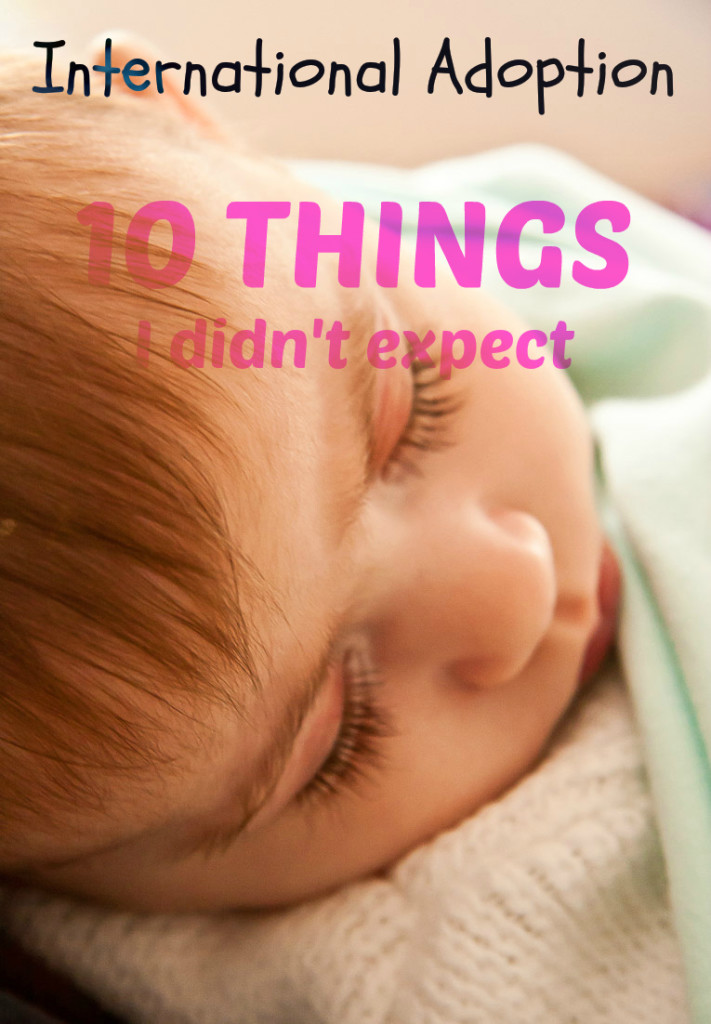
International Adoption things I didn't expect

Eight years ago, when we decided on international adoption, I had expectations about how things would go. And you know what? To say our adoption journey didn’t go as planned, is an understatement. Here are 10 things I didn’t expect.

We might not get a child: We investigated domestic adoption first, met with a couple adoption attorneys and spoke with one open adoption agency in our city. In each case we were dissuaded from adopting domestically due to our ages and the fact we’d only been married for one year. We were told that birth mothers would be more likely to choose adoptive parents who could demonstrate a long relationship history. I’d also heard several heartbreaking stories of prospective adoptive parents whose adoptions fell through at the last minute, on one occasion several days after they’d taken custody of the child.

So we decided to pursue international adoption. When we started out, I remember saying, “Well, the road might be long, but in the end we’ll be parents.” I’d never known anyone who adopted internationally have an adoption (or even a referral) fall through. Until us. One trip to meet a child with significant special needs who we decided to pass on, one disrupted referral, one referral that never became official, two trips to register a child only to have that adoption fall through ten days before our court trip. We made a total of five trips before we brought home our daughter. Although our story was “a first” for our adoption agency I have now heard a number of stories (all involving different agencies and countries) where adoptions were disrupted, or where the prospective adoptive parents had to travel multiple times before finalizing an adoption and bringing a child home. Which brings me to…

“Scope creep”: Whenever you tackle a home improvement project, everyone warns you it will cost more and take longer than you expect. The same is true for international adoption. Granted, our adoption took MUCH longer than we (or anyone else) expected but, in general, the trend for international adoption is longer wait times and greater expense–in part because you end up needing to renew many of your documents, and your dossier, as you wait–sometimes for more than five years–just to receive a referral.

Creating, and renewing, a dossier costs a lot of money. Our dossier was made up of two dozen documents. Each document needed to be notarized and then apostilled by our secretary of state, to the tune of $25 per document. You can read more about the “ABCs” of apostilles (for any state) here. There were fees to a social worker for our home study, fees to our adoption agency, fees to obtain police and FBI clearance, acquire “vital records” (birth certificate, marriage certificate among others. And there were also fees to apply for permission from our government to adopt.

Any time I hear someone say (to a woman struggling with infertility) “Well…you can always just adopt,” I cringe. There is no such thing as “just adopting.”

Attachment might be difficult: I can’t tell you how many people, including our social worker, told us “Your baby will be less than one-year-old when she comes home. Attachment will go smoothly.” But it didn’t.

My first clue something was amiss was when my daughter took the hand of a complete stranger at a park…and walked off. Then she started climbing into the laps of other adults while rejecting us, me in particular. We started to become concerned, in part because her behaviors indicated she was having a difficult time attaching to us, and also because we worried for her safety.

We also made a big mistake in our first weeks together as a family. Our daughter toured around strapped mostly to my husband, a mistake we made because we’d heard adopted kids more frequently reject their father. So we figured we’d offer her more closeness to Dada up front. And it backfired. Because then she had trouble attaching to me (and had a very anxious attachment to him).

We made some other mistakes too. For our first day home, weeks, maybe even months, we should have been the only adults to touch or hold our daughter. Even close family members should have been held at bay until our daughter really caught on to the idea that we were her primary caregivers. We were the ones, the only ones who she should come to for affection. But we have wonderful, supportive, loving family members who we asked to help us out. And boy did we need help, especially that first night home after being up for 36 hours straight, on planes for 16 of those hours, with a 12 hour time difference…and we were sick. In retrospect, we now think we probably should have “manned up,” with a lot of Tylenol and good coffee, and flown solo as parents for awhile, difficult as it would have been.

So how have we worked through all of this? We sought the support of an amazing attachment therapist. I now know our daughter’s struggles with attachment are not atypical for an adopted child, even one adopted as young as our daughter. I also understand that because she had eight nannies who cared for her on rotating shifts, her needs were not immediately met. In her mind, the “moms” could not be trusted to be there when she needed them. Whichever nanny was watching her was certain to leave and be replaced by another. So rejecting the “one you’re with” but charming the one who might be your “mom” next was her way to protect against rejection and assure her someone new was lined up.

And, having sought out medical and psychological professionals, we now also know our daughter has ADHD, which probably explains some of her challenges with snuggling and being held. She simply could not stop moving. The kinds of comfort we wanted to offer, were uncomfortable for her.

In the two years we’ve spent in therapy, our daughter’s attachment to us has strengthened significantly. She knows more about how to be a “family girl,” and is less likely to be inappropriately affectionate with people outside our immediate family and a few trusted caregivers. As a mom, I still worry about the risks she might take as she grows up, but I am more confident we have the tools now to help her make safe choices.

Attachment might be a difficult–for us: Wow. This one really threw me. I’d longed to be a mom and have a child. My husband and I spent years in what turned out to be one of the most difficult journeys to adoptive parenthood I’ve heard of. Here I was with a child. A really cute, smart and charming child. Everyone who met our daughter adored her. How could I not be totally gaga in love with this child–my child? What was wrong with me? I felt so much fear and guilt and anger at myself. Sure, I’d taken the pre-adoption courses, read books and blogs about how attachment is a two-way street yet I never, ever–even for a brief moment–imagined this might happen to me. But it did.

Once again, thank goodness for a good therapist–mine. And a few adoptive mom friends who got it…and maybe had even been there themselves. And my husband–man, what would I do without him? We don’t always see eye to eye, but we are a good team, “a force to be reckoned with” he’s said on more than one occasion. He stood by me when the going was tough. He still does when it is. And sometimes it is.

I admit I am envious of the moms and dads who fell instantly and deeply in love with their child. But now I know it doesn’t happen this way for everyone. Every relationship has its own timeline. So if you find yourself in this boat, know you are not alone. You aren’t the first and won’t be the last mom who’s ever felt this way. Try not to retreat or berate yourself. Reach out for help, because it’s out there. You will get by…with a little help from your friends.

Our child might be different–possibly very different–from us: I am not talking about racial or cultural differences here (though, for many families, these are weighty issues), but personality. Ironically, our daughter looks a LOT like us, me in particular. But our personalities couldn’t be any more different. Both my husband and I are somewhat introverted and quiet. We like solitary pursuits: photography, gardening, astronomy. Our daughter? She is the life of the party! Loud, extremely extroverted, dramatic. She likes–needs–to be around people. She is very active, hyperactive even.

I’m not of the mindset that families need to look and be alike, but I freely admit the differences between us can be a source of frustration and stress. Our differences  make it challenging to be the kind of parent I want to be, that I hoped to be. I’ve had to rethink a lot of the things I expected I might do with our daughter, because it’s just not her gig.

Some people will not like us because we adopted internationally: I knew I’d run into well-intentioned–but clueless–people who would ask intrusive questions: Do you know who her real parents are? How much did you pay for her? I expected I’d even occasionally run into uninformed people who might say hurtful things: Why didn’t you adopt from your own country? Aren’t you too old to be the mother of an infant? But what I did not expect were the people who were completely opposed to our adoption, sometimes vehemently so. On my blog, I’ve received my fair share of hate mail. People who say I have no business adopting, or adopting from the country we adopted from, or that I am a despicable person for taking my child from the country of her birth. That if we had left her there, she would have been adopted by someone in her country or taken in by family members. And, if not, that she would have been better off left in the orphanage.

There really won’t be much information about our child’s social and medical history: Much of the time families who adopt internationally receive no information whatsoever about the biological family of the child they are adopting. In some countries, adoptive parents might be told the birth parents names and a few details about why they were unable to care for their child. And there are some countries where prospective parents will meet their child’s biological family. Rarely (though I do know of one country where this is the case) are international adoptions “open” to the extent they are if you adopt domestically (at least in the U.S.).

I think we expected there would be more information. That somehow the medical personnel at the hospital would keep better records. That somehow the staff at the orphanage would divine a fuller picture of the birth family or the circumstances that led to our daughter being placed in a orphanage. That we would receive monthly updates on our child’s progress: her weight, height, head circumference, photos. No one told us that any of this would happen, but we were more hopeful than we probably should have been.

We even conducted a birth family search (a couple years after our daughter came home), with the hope we could find out more about her birth family and potentially develop a relationship with them. In our daughter’s case, her birth mother was not interested in ongoing communication, and although she shared some photographs with us, we found out very little about our daughter’s biological family social and medical history.

Still, I am more fortunate than many parents who adopt internationally. I know the birth mother’s name and how old she was when our daughter was born. I know how many weeks her birth mother was pregnant, a few details about the delivery and that our daughter spent the first three weeks of her life in the hospital. But that’s all I know. When I fill out medical history forms, I can’t answer many of the questions. Did the birth mother smoke, or drink, during pregnancy? Is there history mental illness in her birth family? Did any family members die from hereditary diseases? I do have one piece of medical information that will be important for my daughter to know when she gets older and for that I am grateful.

Adoption is loss: People might say our daughter is “better off” but the truth is, we got to parent this little girl because someone else couldn’t. I know the reasons behind why our daughter’s birth mother was unable to care for her. I know why she wasn’t taken in by her extended family. But I also know they must grieve this loss. I grieve their loss. As much as I wanted to be a mom and international adoption was the route I took, I truly wish there weren’t so many children without homes and families–all over the world.

My daughter will grieve this loss too. She is too young to fully understand the circumstances that resulted in her being placed in an orphanage and then brought half-way around the world to live in our home. As she grows up, I’m certain she will feel many emotions about being adopted. Some of those emotions–I hope–will be happy. That her birth mother chose to complete her pregnancy and place her in an orphanage in the hopes a family might adopt her. That she now has two parents and many extended family members who think she is the bees knees. But I also know she might feel anger and sadness. And those feelings are okay too.

Adoption is a loss for adoptive parents too. People tend to make a big deal about how our adoption was “meant to be,” that kids find the family they were meant to be in and adoptive parents find the child they were meant to parent. But my husband and I are the “last in our line.” When we are gone, there will be no more us–no more of our genetics being carried down through generations. It’s hard not to feel sad about that, to wonder what might have been had we been able to conceive and give birth to a child.

International adoption is a crazy train: If someone had told us how crazy, how insanely crazy adoption would be, I wouldn’t have believed them. That’s the thing about expectations. By definition expectations are “a strong belief that something will happen or be the case in the future.” I expected our adoption would go fairly smoothly, even if the process took a  long time. I expected our bonding as a family would be a walk in the park. Those expectations weren’t very realistic. I know that now and I knew that when we started, but somehow I convinced my brain otherwise.

Adoption builds families: For all its imperfectness, loss, struggle, challenges adoption builds families. Children are raised in a home with a family who is able to care for them and meet their needs. I’ve seen many articles written about this topic where the author ends by saying if given they option, they would do it all over again. Whoo-boy, that’s a tough one because I sure wouldn’t want to relive those crazy train years. Our adoption experience was one that–quite honestly–I wouldn’t wish on anyone. It was long. It was hard. It was expensive. It was emotionally, psychologically and spiritually draining.

But I’ll be darned if what I said at the very beginning isn’t how turned out–for us anyway. In the end, we did become parents and one little girl found her forever home. The path was not straight but there was a path. And love may not have been instantaneous but love grows.

It’s all about the journey,

Beth

Filed Under: Adoption Tagged With: international adoption

Adopting ain’t what it used to be

October 22, 2010 by Beth Shepherd

Big Papa and I come from an extraordinarily adoption-friendly family. His mother adopted both of his siblings back in the 1950s. Big Papa’s sister, the oldest, was adopted internationally from Germany. I am still amazed that his mother got on a plane by herself and flew to a country we’d just gotten over a war with, to start their family. International adoption was quite rare at that time. Shortly after, Big Papa’s brother was adopted domestically. His birth location and birth family were kept secret, although Big Papa’s parents did both discuss adoption and made a point to let each of the three children know, that no matter their origin, they where loved and a part of the family just as much as the next child.

Back in the 1950s adoption still had certain stigma. Families didn’t talk about it much. Open adoption, where a birth mother maintains contact with the adoptive family was unheard of. There were no online forums or chat groups where adoptive moms could interact, share their stories, get advice and find solace amongst other adoptive families.

I still remember a high school friend of mine who was adopted, the oldest of three children in her family. She had brown eyes and dark kinky curly hair which was distinctly different from her two blue-eyed, blond straight-haired siblings, both of whom were biological children. Everyone knew she was different…adopted. But no one talked about it.

My sister, who is my only sibling, is also an adoptive mom. She adopted her daughter, my niece, from China eleven years ago. At that time, even though numbers of Chinese adoptions had declined from previous years, there were still thousands of baby girls coming home to families in the U.S., and fairly quickly at that. Once she had her dossier in, they waited about nine months before they got the call.

One picture of my niece, an old-fashioned ‘head shot’ photograph, was all they received. No video. No string of photos from different angles. 1999 was still early in terms of the internet. It wasn’t long after they received their referral that they were on a plane with a dozen expectant families, flying to a hotel where they waited until the moment when each of their daughters was brought out and placed into their arms. They never went into the orphanage where my niece spent the first months of her life. They made only one trip. And, they made an enormous, life-changing decision based on a single two-inch by two-inch head shot and a page of cryptic medical information.

My-oh-my, how things have changed. This is not our mother’s adoption. Or even our sister’s. Adoption circa 2010 is a different beast altogether and it continues to evolve.

Many of the changes, both to domestic and international adoption, are positive. Domestically, many families have access to birth family information and may even maintain relationships to a greater or lesser degree with their child’s birth family. Internationally, with the advent of the internet and digital photography, families are more likely to receive several pictures or even video footage of their child. It’s easier to direct questions to overseas agency counterparts. Critical medical information, when available can be more readily transmitted back to international adoption doctors here in the U.S. Overall, adoption is much more open and broadly accepted as one way to create a family.

That said, there have also been changes to the adoption process, particularly internationally, that have added layers of bureaucracy and paperwork, resulting in longer waits and greater time between receiving a referral and brining a child home. You can imagine why my mother might have a quizzical look on her face when I tell her I might need to make three trips before I bring our child home. Or why our wait has taken two years. Even the fact that adoptions in China have moved into a five to six year wait period is positively dumb-founding. How is it that adoption has changed so radically in such a short time?

Domestic adoptions are now almost exclusively open adoptions, where birth mothers select the family who will raise their child. In our state, Washington, foster-to-adopt opportunities are soon to become a thing of the past as our state system moves towards programs to keep children with their extended birth family. Countries which used to be enormously popular for international adoption, such as Guatemala, no longer have agreements with the U.S. and most countries are instituting continual changes to the requirements for prospective adoptive parents. Single women adopting from Ukraine? Sorry, probably not any more. Unmarried couples adopting from India? No, I don’t think so. Overweight and trying to get a Chinese baby? Forget about it. Been to a psychiatrist? Don’t think about adopting from Russia. Just the restrictions and regulations alone are enough to make even a college graduate’s mind run in circles.

I have to say that while I consider myself on the far end of the bell curve when it comes to being educated about an endeavor before I launch into it, the crazy changes, paperwork, government applications and approvals, have turned out to be far more complex – and frustrating –  than I ever remotely imagined. Two years ago when we made the decision to adopt, I remember asking Big Papa: “Are you sure you want to do this? It’s going to be a lot of paperwork.” “Are you really up for how invasive all the questions and interviews will be in our lives?” “It could take a year or so before we get a baby.” “Sure,” he said. “At least adoption is a pretty reliable route and we know we’ll end up with a baby in the end.”

It’s almost laughable now, with all we’ve been through (and I haven’t even been able to write about the half of it). Yes, we will most likely end up with a baby in the end. And, truly, that is bar none the most important thing. But I would be lying if I didn’t say acknowledge that the stress placed on our emotional and physical health has been higher than either of us ever anticipated.

Even our relationship – which I gratefully consider strong – has been tested. It is true that we married late and started down this road at an age when some couples our ages are getting ready to become empty-nesters. But I know we both are a bit envious of friends of ours who had a few carefree blissful years devoid of discussions about FBI fingerprints or fertility.

On the positive side, and there are indeed many positive aspects to our experience, I am extremely thankful we have the opportunity to meet our child before our final court date. While Armenia is exactly half-way around the world, parenting is for a lifetime and being able to meet our kid-to-be before everything is signed, sealed and delivered is a welcome benefit.

In the age of the internet we are also fortunate to be able to receive both video clips and still photos of the child we’ll be adopting. Having this additional visual information is not only useful to us, but it is an early record of our child that we can share as she grows.

Despite however much I might whine about all the additional paperwork, delays, miscommunications and frustrations associated with Armenia being a Hague-adoption country, it is one of the reasons we chose this country. I rest easier with the knowledge that children are placed on a data base for three months before they are available for international adoption. Family and community members have a chance to say that want to adopt these children first – which is as it should be. Hague process is also designed to reduce child trafficking and I feel better knowing that it’s extremely unlikely that the birth mothers who relinquished their children did so to benefit in any monetary way.

And, after visiting the orphanage our child will likely be coming from, I feel secure in knowing that the level of care is as high as it possibly could be. Children have their own beds and the rooms are clean. The nannies are exceptional and the children are well cared for, as much as can be possible in an orphanage environment.

There is no way to sugar coat how difficult adoption is. People tell us that once we have our child, we’ll forget about all the challenging moments we experienced, just like moms who give birth forget about the pain of childbearing. I beg to differ.

I know nine months can seem like a lifetime for an expectant mother. Now imagine waiting two or more years to cradle your baby. Or, imagine giving birth, seeing and holding your baby, and then being asked to give her back until more paperwork is filed and a court date arranged: Come back and get her in four to six months.

When all is said and done and our child is home with us, I have no doubt that we’ll feel elated, if not exhausted. Big Papa and I do long for this waiting period to be over and for the next phase of our life, parenthood, to begin.

Filed Under: Adoption, Family Tagged With: 1950s adoption, international adoption

Leavin’ on a jet plane: How to pack for an international adoption trip

August 10, 2010 by Beth Shepherd

suitcaseFor those who follow my blog, first let me say that I’m not the one going on a trip…yet. However, enough people have asked me what I plan to bring when the moment arrives, that I decided to do a bit of research and compile a list that might be useful if you are about to embark on the exciting adventure to bring your child home.

I remember when my sister adopted from China eleven years ago. She said she needed an entire suitcase devoted exclusively to medicine and the several thousand dollars in newly minted bills she was told to bring along, and couldn’t decide if she felt more like a bank robber or a traveling doctor. The truth is that what you will need to pack may vary considerably depending on the:

  • Country you are adopting from
  • Age of your adopted child(ren)
  • Season/time of year (both at your destination and at your home location in the U.S.)

Traveling to Russia in the winter, for example, is going to require a lot more warm clothing for both you and your child than, say, traveling to Ethiopia in the summer. Likewise, returning from India to Seattle in the fall might necessitate light baby clothing in-country, but something warmer and more substantial when transferring planes and getting to your home once you arrive back in the U.S. If your child is an infant, bringing instant formula is essential for plane travel whereas you might pack cereal for a toddler. Diapers, a folding umbrella stroller or clothing can be easily purchased in some countries but not in others. Therefore, all the items mentioned in this post are merely suggestions. Every international adoption trip, just like every adoption, has its own customized packing list to match its unique story.

Before I launch into an itemized list (here is one of those times when I am grateful for my list-making abilities), I want to share one of the most important tips I heard regarding plane travel there and back. Make sure that any items that could be considered ‘essential’ are packed as carry on in case your luggage is lost. Murphy’s Law of adoption travel (or any air travel for that matter) stipulates that if you really need it and forget to bring it with you on the plane, your luggage will inevitably arrive late, never, or at another destination altogether.

Also, remember to leave a bit of room in your luggage for mementos you may purchase on your trip. Although you can always donate extra diapers you don’t feel you’ll need or clothes that turn out to be too big or small for your child, having a bit of ‘wiggle room’ is always a good idea.

Speaking of luggage, most international airlines have reduced the weight limit of checked baggage from 70 pounds to 50 pounds or less (for economy class) depending on the airline! Be sure to weigh your bags before you head to the airport (take them to a packing/shipping store or be brave and get on a home scale holding your luggage).

Your adoption agency may also have suggestions for items that people have found useful on previous trips. And, if not, there are a number of articles online that offer country-specific suggestions for international adoption travel.

planeDocuments – Take all documents in your carry-on!

  • Copy of your dossier
  • Passport and visa (if required)
  • Expand-a-file pocket labeled:  Travel, Embassy, Forms, General info, Medical, Baby, Mementos, Language, Thank You Notes, etc.
  • Money: in many countries, it is not possible to cash traveler’s checks and/or ATM machines are not available. Try to find out if there are any fees or expenses you will need cash for and budget accordingly. A money belt for carrying cash is a good idea.  In some countries you will need “crisp new bills” in denominations of $20 and $50. If this is the case, call your bank to request needed cash at least two weeks before you leave. Many banks do not keep much pristine cash on hand and will need to order it for you.
  • Names and phone numbers for essential in-country contacts, U.S. Embassy or Consulate Office
  • Names, phone numbers and email addresses for essential stateside contacts; a neighbor , friend or family member who can access your home or wire you funds, your bank, your U.S. adoption agency, your social worker and/or attorney,  international adoption doctor, insurance company, etc.
  • Photograph of the translator, driver or person meeting you at the airport (though chances are they’ll have your photo from your passport)
  • Electronics – Take all electronics in your carry-on
  • Cell phone with SIM card that works internationally or prepaid international phone
  • Camera, extra batteries, charger, flash drives for back up
  • Laptop
  • International converter (for international outlets and electrical service)
  • Flashlight
  • Video camera (optional)
  • Travel Alarm Clock (everyone says the baby is a sufficient alarm clock!)
  • Batteries: extras for your electronic devices as batteries can be hard to come by in some countries

Medical Supplies and toiletries – take what you can in carry-on (remember that liquids are limited to 3 oz. per item so you may need to find, or create, travel-sized amounts)

Again, note that medical conditions vary from child to child and families adopting from certain countries are more likely to experience some conditions over others.

Baby prescriptions:

  • Antibiotic (in powder form which pharmacist will give you) and pre-measured distilled water to go with it (mix exactly as directed; put distilled water in checked baggage)
  • Prescription cream for scabies, ringworm cream

Baby non-prescription:

  • Baby Tylenol and Motrin (know beforehand under what circumstances you would choose either to use)
  • Lotrimin AF for diaper yeast infection (the tube will say it’s for athlete’s foot, and it is, but it’s a non-prescription antifungal recommended by pediatricians)
  • Hydrocortisone cream (half or one percent) for rashes
  • Pedialyte replacement for diarrhea (there is a powdered brand that you can reconstitute called Kaolectrolyte
  • Lice shampoo and comb (pack in checked baggage)
  • Pediatric cough syrup
  • Thermometer
  • Oragel
  • Glycerin suppositories for constipation in infants
  • Nail clipper
  • Nose syringe
  • Syringe-type dropper or medicine spoon
  • Baby wipes
  • Baby shampoo and lotion (pack in checked baggage)
  • Diaper Rash Cream
  • Playtex bottles with drop-in, disposable BPA-free liners (no need to wash bottles, just nipples), and several nipple of various speeds. Remember the water will likely not be safe to drink so you will be using bottled water to make bottles.
  • Diapers: At least 5-7/day; you might be able to diapers get in-country but it’s still a good idea to carry some as disposable diapers bought in other countries are often not as good quality as in the U.S. Often new babies have diarrhea and go through many diapers per day.
  • Formula: Chances are you will be able to buy baby formula in your child’s country, the type he is accustomed to; but, you may also want to pack a little of your own.
  • Electric hot pot or heating element to boil water (tea for adults or instant soup) or to sterilize nipples for baby bottle
  • Plastic tongs for retrieving baby bottle nipples from boiling water

Adults for carry-on:

  • Regular prescriptions for the adults traveling plus Cipro for each adult
  • Non-prescription for adults: Neosporin, Baindaids, Immodium, Pepto-Bismal, Nyquil/Dayquil, Mylicon, Mucinex D, Eyedrops
  • Pain medication for adults: Tylenol, Excedrin, Aspirin, Ibuprofen (whichever you favor)
  • Benadryl and or Zyrtec for allergies
  • Earplugs and/or eye shade
  • Lotion (small bottle): bring a baby lotion that can be used for both adults and your child
  • Tissues/Kleenex
  • Travel toilet paper
  • Cleansing cloths with soap (Ponds, etc.)
  • Hand Sanitizer
  • Toothbrush/toothpaste
  • Contacts, saline solution (travel size)
  • Glasses (and sunglasses)
  • Lipbalm
  • Plastic bags (Ziploc) in a few different sizes (even a couple grocery bag size): plastic bags are so useful for many things, like the clothes that end up with baby puke on them at 30,000 feet

Toiletries for checked baggage (or preferably travel sizes for carry-on)

  • Travel Shampoo/ Conditioner
  • Brush and/or comb
  • Hair clips/headband/pony tail holders (something to get hair out of face)
  • Make Up
  • Soap/ body wash
  • Sunscreen
  • 1 extra towel (light weight absorbent towel)

Adult clothing

Note: Choose clothing that that is in neutral colors and goes together. Clothes that you can layer and un-layer that are light-weight, non-wrinkling and dry quickly are best. Many countries have laundry service or you can pack a Ziploc baggie with laundry detergent and either roll wet, clean clothes in a towel to dry or bring a short line of twine for a clothing line.

One article I read on packing light for travel, suggested limiting yourself to 25 articles of clothing (including underwear!). Make sure that every item you bring can be worn at least twice and goes with most of the other clothing you bring.

  • 1 pair of closed-toe, comfortable shoes to wear that are good for walking
  • If hot weather, one pair comfortable flip-flop/sandals
  • 3 shirts (sleeve length and material depending on weather): of course if you sweat more, you might take more shirts and less pants/skirts
  • 3 pants and/or skirts (depending on your gender and your style preference)
  • Sweater or light jacket (or sweater plus heavier jacket if cold climate/winter season – many countries do not have central air or heat)
  • Hat (to block sun etc.)
  • 1 hanging around the room outfit (e.g.  sweats or lightweight pants, t-shirt, hoodie)
  • Socks
  • Something to sleep in
  • Underwear for one week
  • Raincoat
  • One “nice” outfit for court dates

For women: a colorful pashmina or other large scarf can dress up an outfit and be used as a wrap, or shawl and even double as a pillow. Bring only inexpensive, low maintenance jewelry (e.g. earrings that cannot be pulled out of your ears by a curious baby). Check out this Wanderlust and Lipstick article on ‘Packing tips for women travelers.‘

Important! Take one change of clothes in your carry-on. I can’t tell you how many times I’ve heard parents tell of bringing a change of clothing onto the plane for the baby if she poops/pukes, but not for themselves if said baby poops/pukes on mama…or if luggage is lost.

rain on plane windowBaby clothing and accessories

NOTE: Clothing numbers are based on five to seven day in-country stay. Consider carrying a few different sizes if you don’t know accurate size/weight of your child…you can always donate what you don’t need to the orphanage. Knits and elastic waist items that will wash and dry easily, if needed.

It’s also nice to bring a few gifts for in-country staff (pack in checked baggage): orphanage staff, translator, host, attorney and driver. We like the idea of gifts with “local flavor” – as Seattleites we might bring chocolate bars from Seattle’s ‘Theo Chocolate,’ ferry boat ornaments, smoked salmon and postcards with pictures of the Pacific Northwest.

**Take approximately half the clothing listed below in your carry-on**

  • 8 outfits
  • 8 pjs
  • Socks –several pairs
  • 1 pair of shoes
  • 5 Bibs
  • 3 knitted caps
  • 5 burp cloths
  • 2 blankets
  • 1 crib sheet
  • Age appropriate toys (2 rattles, soft book, 2 teething toys): take one each in carry-on
  • Baby Bjorn, sling (if small infant) or baby carrier of your choice
  • Head to Toe Fleece Outfit (might only be necessary when landing landed back in the US and needing to switch terminals at then get to our car when home; and, weather depending)
  • 2 Sleep sacks  (take just one in carry-on)
  • Pacifiers (2 different types)
  • Baby towel
  • Umbrella stroller (depending on country, can be purchased in country)
  • Pac ‘n Play (one more thing to carry on, but I have heard several adoptive families say that it was valuable when they traveled…again, depending on distance and time to travel home).

For older child

  • Age-appropriate toys (maybe something soft and cushy for carry on that would double as a pillow)
  • Clothes – several changes
  • Pull-up training underpants…just in case
  • Picture book with photos of “new home”
  • Picture ‘Point Book’ (travel book with photos of just about everything – we have one called “Point It: Traveler’s language Kit”) – great to point at what you’re trying to talk about if you don’t know the language (works with adults too!)
  • Arrange for someone to explain – pre-flight – what they can expect/what is going to happen

Additional Carry-on Items

  • A few protein or oatmeal bars or other airline-friendly snacks. Bring a few meals worth of comfort food for times you may not feel like leaving your room with your new child. Cup a soup, instant oatmeal, chocolate, granola bars, cheese crackers, beef jerky, and dried fruit are all good choices. Don’t forget a bowl and spoon for your in-room meal!
  • Water (purchased after security check)
  • Deck of Cards or travel game (for adults)
  • Books and/or magazines: Everyone says they tend to bring more than they need (e.g. one)
  • One in-country guide/travel book (or relevant pages torn out/printed)
  • Notebook/Journal and pen

Whew! Well, I’m sure this list – while exhausting – is not exhaustive. Adapt, as needed, and if you’re about to jet off and pick up your kiddo:

BON VOYAGE…and Congratulations!!

Filed Under: Adoption, Travel Tagged With: international adoption, lists, packing, plane, Travel

Some might fend off a mid-life crisis by leaving the comforts of their corporate salary to jet off to a deserted island. Others might buy a Jaguar. I’ve chosen to dive head-long into my 50s and beyond by becoming a first-time parent. At any given moment you might find me holding a camera, a spade, a spatula or a suitcase. Or my little girl's hand. Adopted from Armenia, she puts the Pampers and Paklava into my life.

Subscribe to Blog via Email

Enter your email address to subscribe to this blog and receive notifications of new posts by email.

Recent Posts

  • Ghosts and goblins of Halloweens past
  • Raise a glass—or ten
  • No me without her: A life before motherhood
  • Leaving the orphanage with a priceless pair of tights
  • Rock of ages: Celebrating five years together as a family

Tags

366 Project Adoption anniversary Armenia autumn Bainbridge Island Baja Birds birthday blog cat cats chickadee China Christmas fall ferry flowers France Garden Gyumri Halloween Hawaii Holiday ice cream Kauai leaves London Mamas with Cameras Mexico Mother's Day Mt. Rainier New York orphanage Paris Puget Sound robin Seattle taxi Thanksgiving Tibet USCIS Valentine's Day wedding Yerevan

Categories

  • Adoption
  • Armenia
  • Family
  • Food
  • Friendship
  • Garden
  • Holiday
  • Miscellaneous
  • Paris
  • Photography
  • Recipes
  • Review
  • Seattle
  • Things to do with kids
  • Travel

Sites I like

  • The Wayfaring Voyager
  • Wanderlit
  • Wanderlust and Lipstick
follow us in feedly

Image Copyright

Unless specifically mentioned, all images on my blog are my own original photographs and, therefore, copyright protected (©Beth Shepherd). Feel free to use my images for non-commercial use so long as you provide me with the image credit. Likewise, if you pin my images to Pinterest, please mention me by name.

Copyright © 2026 · Pamperspaklava · WordPress Barista