Pampers and Paklava

  • Home
  • Photography
  • Travel
  • Food
  • Garden
  • Contact

Anoush Abour Recipe: Armenian Christmas Pudding

December 31, 2015 by Beth Shepherd

Anoush Abour means “sweet soup” in Armenian. This dish has graced New Year’s and Christmas tables in Armenia for centuries and most likely predates Christmas itself.
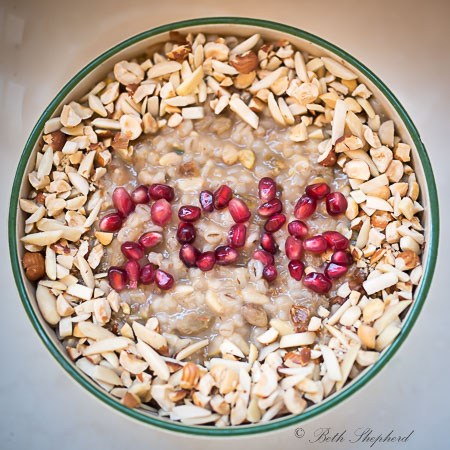
Anoush Abour Armenian Christmas Pudding

But wait, you say. Christmas was last week, December 25. Not so if you are Armenian. December 31 kicks off the holiday festivities with Father Christmas visiting on New Year’s Eve and Christmas itself taking place on January 6.

While most Armenians are in agreement on the date when Christmas is celebrated, if you ask ten people how to make Anoush Abour, you’ll get ten different answers. Usually, when I make a new dish, I do a bit of online research to compare recipes–which, I confess, can take up hours of time! I am always amazed at the myriad ways people make “the same thing.”

Almost all the recipes I saw for Anoush Abour use apricots and golden raisins and almonds were the most frequently mentioned nuts. Sometimes honey was used and other times sugar…or no sweetener at all. Pistachios, pine nuts, walnuts, hazelnuts (filberts) and pecans were all game. Almonds might be slivered or whole and blanched. Pomegranate seeds? Some say yes; others say no. The same goes for rosewater, orange flower water and cinnamon.

Many of the Anoush Abour recipes call for “skinless whole wheat” or gorgos or korkot. I’ve been told you can find it in Middle Eastern grocery stores, but I have not looked for it. I have also seen this grain referred to as “pelted wheat or pearled wheat.” From what I’ve gathered, the most likely grains to use for this recipe–broadly available in the U.S.–are  white wheat berries or pearled barley.

Instructions for how to make Anoush Abour also vary from how to cook the dried fruit to whether the top of the dish should be decorated with nuts in a recognizable pattern. One recipe mentioned setting whole blanched almonds on top, in the shape of a star. Another said that, traditionally, women would use almonds to write the number of the new year.

barley cooking

However you make it, Anoush Abour is a delicious way to ring in the New Year. Here’s my take on the recipe:

Anoush Abour

Ingredients

  • 1 cup white wheat berries or pearled barley (I chose barley because my husband can’t eat wheat. Barley does have gluten, which isn’t an issue for him, but wheat is a no-no.)
  • 8 cups water
  • 2/3 cup honey or 1 cup sugar (I like honey myself)
  • 1 cup apricots, finely chopped, or other dried fruit such as peaches
  • 1 cup golden raisins
  • 1 cup water
  • 1/2 cup pistachios, chopped
  • 1/3 cup pine nuts

Garnish

  • 1/2 cup finely chopped hazelnuts (filberts)
  • 3/4 cup slivered almonds
  • Pomegranate seeds

Note: You can use any combination of nuts you prefer.

Optional

  • Ground cinnamon to taste
  • A few tablespoons of rosewater or orange flower water

dried fruit cookingHow to

  1. In a large pot, combine wheat (or barley) and water. Bring to a boil for five minutes, and then cover and simmer on very low heat for an hour. When the hour is up, set the pot aside for 5-6 hours, or overnight for the grains to soften and the “soup” to thicken. Note: Anoush Abour is more like a pudding or porridge than a soup in terms of its consistency.
  2. On low heat, in a small saucepan, add dried fruit, honey (or sugar) and one cup water. Stir occasionally until nearly all the water is absorbed. Add pistachios and pine nuts. Simmer for another 10 minutes. Thoroughly drain and cool.
  3. The next morning (or six hours later), mix the sweetened fruit and nuts into the (now room temperature) barley.
  4. Add two tablespoons rosewater.
  5. Cook the combined ingredients over low heat for 10 minutes. Your Anoush Abour should be thick but not dry.
  6. Pour into a serving dish or bowl.
  7. Garnish with hazelnuts, slivered almonds and pomegranate seeds (You want to garnish when the dish is warm and a bit sticky).
  8. Serve slightly warm or cooled to room temperature (and you can store it in the refrigerator for up to one week).

Anoush Abour 2016 Armenian Christmas Pudding

My 2016 be filled with sweetness.

Shnorhavor Nor Tari—Happy New Year from Pampers and Pakhlava

Take the road less traveled, Beth
And if you want to read more about all things Pampers, follow me on Facebook, Twitter or RSS/email.

Filed Under: Recipes Tagged With: Armenian Christmas

Merry Armenian Christmas

January 5, 2015 by Beth Shepherd

To my friends here in the U.S., and overseas, who celebrate Armenian Christmas on January 6: Շնորհավոր Ամանոր և Սուրբ Ծնունդ (Shnorhavor Amanor yev Surb Tznund).

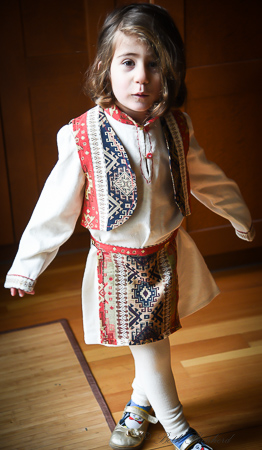
Armenian Christmas costume

In her Armenian costume

Whether you celebrate holidays the Armenian way or with your own cultural and seasonal flair:

Merry Christmas

and

Happy New Year from Pampers and Pakhlava

Take the road less traveled, Beth

Filed Under: Armenia, Holiday Tagged With: Armenia, Armenian Christmas

The color of pomegranates

January 6, 2010 by Beth Shepherd

Shenoraavor Nor Dari yev Pari Gaghand! That’s ‘Merry Christmas’ in Armenian.

While the glow of the holiday season is fading in the U.S. and Christmas trees have been stripped of their glory and are heading to the curb, today is Christmas Day in Armenia. Armenian Christmas is celebrated January 6. So it is both ironic and fitting that the wine tasting at 12th & Olive Wine Company, this past Saturday, featured pomegranate wine.

Pomegranate wineThe pomegranate, with its symbolic association with fertility, is the national fruit of Armenia. When Big Papa and I visited Yerevan this past September, the pomegranate was everywhere. At the Vernissage Flea Market in the center of the city, we saw glass pomegranate earrings, pomegranates painted on bookmarks and artwork and dried pomegranate Christmas tree ornaments.

“Pomegranate” is from the Latin “pomum granatum” which means “apple of many seeds.” Pomegranates are high in antioxidants. 100 ml of pomegranate juice has three times the antioxidants of 100 ml of red wine or 100 ml. of green tea. The health benefits are almost legendary. Consuming this fruit is thought to prevent lung, prostate and breast cancer, Alzheimer’s and Osteoarthritis. It protects the arteries, lowers cholesterol and blood pressure and may reduce dental plaque. It is even purported to increase virility and fertility.

At the 12th & Olive tasting we sampled three wines made from pomegranates, a sparkling wine from Argentina, Armenian wine, and an Israeli dessert wine. All three had their own unique charm. Big Papa and I were excited to have a taste of the Armenian wine as it’s a rarity to find anything made in Armenia here in Seattle.

Both the Argentinean sparkler and Armenian wine were produced by ReVah. Steven, the wonderfully knowledgeable, friendly and helpful owner of 12th and Olive told us ReVah sources the fruit from each country. The Armenian wine is made at the Proshyan Wine Factory, which also makes some of Armenia’s famous brandy. We noticed Proshyan is in Yerevan and hope to visit the wine factory on our next trip.

Holding our glasses to the light, the color of the wine was a deep red, with shades of violet and raspberry. Putting my nose to the glass there was no mistaking the intense aroma of pomegranates. The wine was a bit sweet on the palate but not as syrupy as I imagined it might be, with hints of fresh fruit and light acidity. For $12.99 it’s a nice wine to enjoy on a warm summer’s day…or for those days when I want to conjure memories of being in Armenia.

When I was a child, my parents often bought pomegranates as a special treat. On a recent trip to visit my mother, she had a pomegranate waiting for me. I love the magic of cutting open the fruit to reveal hundreds of ruby-colored seeds.

Pomegranate’s subtle sweetness now holds an even deeper meaning for me, a thread to the heart of Armenia. Many Armenian fairy tales end thus: “Three pomegranates fell down from heaven: One for the story teller, one for the listener, and one for the whole world.”

Check out the WanderFood Wednesday series for more great food postings!

Filed Under: Food Tagged With: 12t & Olive Wine Company, Armenia, Armenian Christmas, pomegranate, Proshyan Wine Factory, ReVah, Vernissage, wine, Yerevan

Some might fend off a mid-life crisis by leaving the comforts of their corporate salary to jet off to a deserted island. Others might buy a Jaguar. I’ve chosen to dive head-long into my 50s and beyond by becoming a first-time parent. At any given moment you might find me holding a camera, a spade, a spatula or a suitcase. Or my little girl's hand. Adopted from Armenia, she puts the Pampers and Paklava into my life.

Subscribe to Blog via Email

Enter your email address to subscribe to this blog and receive notifications of new posts by email.

Recent Posts

  • Ghosts and goblins of Halloweens past
  • Raise a glass—or ten
  • No me without her: A life before motherhood
  • Leaving the orphanage with a priceless pair of tights
  • Rock of ages: Celebrating five years together as a family

Tags

366 Project Adoption anniversary Armenia autumn Bainbridge Island Baja Birds birthday blog cat cats chickadee China Christmas fall ferry flowers France Garden Gyumri Halloween Hawaii Holiday ice cream Kauai leaves London Mamas with Cameras Mexico Mother's Day Mt. Rainier New York orphanage Paris Puget Sound robin Seattle taxi Thanksgiving Tibet USCIS Valentine's Day wedding Yerevan

Categories

  • Adoption
  • Armenia
  • Family
  • Food
  • Friendship
  • Garden
  • Holiday
  • Miscellaneous
  • Paris
  • Photography
  • Recipes
  • Review
  • Seattle
  • Things to do with kids
  • Travel

Sites I like

  • The Wayfaring Voyager
  • Wanderlit
  • Wanderlust and Lipstick
follow us in feedly

Image Copyright

Unless specifically mentioned, all images on my blog are my own original photographs and, therefore, copyright protected (©Beth Shepherd). Feel free to use my images for non-commercial use so long as you provide me with the image credit. Likewise, if you pin my images to Pinterest, please mention me by name.

Copyright © 2026 · Pamperspaklava · WordPress Barista