Here men from the planet Earth first set foot upon the Moon, July 1969 AD. We came in peace for all mankind.
~Neil Armstrong


Take the road less traveled, Beth
Take the road less traveled, Beth

The last time Big Papa and I stood at an elevation above 12,000 feet, we were in Tibet. I remember Big Papa doing his best attempt at jumping jacks by the entrance to Mount Qomolangma (Mt. Everest) National Park. We were at 17,000 feet. He was a bit breathless.
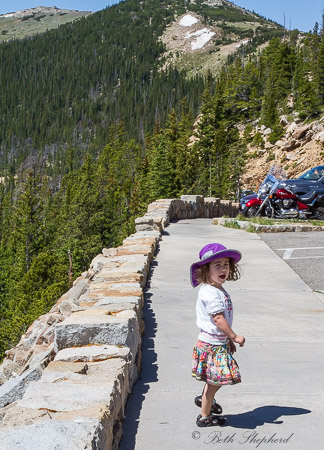
Flash forward six years and one child later. We’re visiting Colorado and standing at 12,110 feet, on the Tundra Communities Trail in Rocky Mountain National Park. Big Papa pushed the stroller like a champ.

As you might guess from the name, the trail traverses across tundra. Alpine tundra begins where trees cannot survive the extremes of cold, wind, and a short growing season. In Rocky Mountain National Park this zone roughly starts at elevations above 11,500 feet. The Tundra Communities Trail begins at a trail head near the top of Trail Ridge Road. The large parking area is nearly 13 miles west of Deer Ridge Junction (Highways 34 and 36), and 4 miles east of the Alpine Visitor Center. When you get out of your car to start your walk, your lungs will experience roughly 35% less oxygen than at sea level. The trail is only one mile round-trip, but you will give your lungs a good workout, especially if you’re not acclimated to higher elevations.

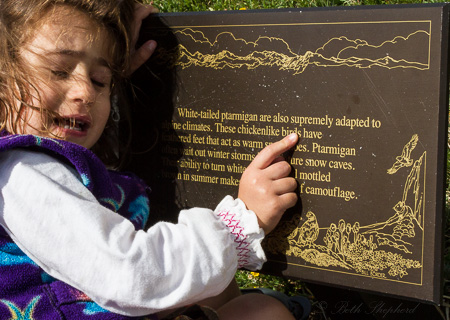
Well-placed signs along the asphalt-paved trail are very educational, and offer stopping points to catch one’s breath. We learned why the short stature of tundra plants is an adaptation that helps them survive in this harsh environment: “at ground level, plants are protected from the harsh elements — winds may be 30 miles an hour at eye level, but only three miles an hour near your feet.”
In the tundra, summer flickers briefly. Temperatures usually stay below freezing for more than five months out of the year. There are only 40 frost-free days per year, and temperatures reach 70 degrees only on occasion. Snow can fall on any day of the year. This area along the Continental Divide receives roughly 40 inches of precipitation each year, 65% of this is snow. During the summer brief afternoon thunderstorms, with lightning, hail and high winds, often occur. In fact, merely two days after we left, two visitors were killed by lightning strikes while hiking near Trail Ridge Road.
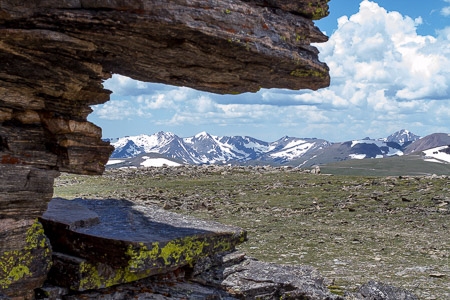
There was so much to marvel at. Majestic panoramas with a ring of mountains topping out at over 12,000 feet (Mount Chapin, Sundance Mountain, Terra Tomah Mountain, Mount Julian, and Specimen Mountain).
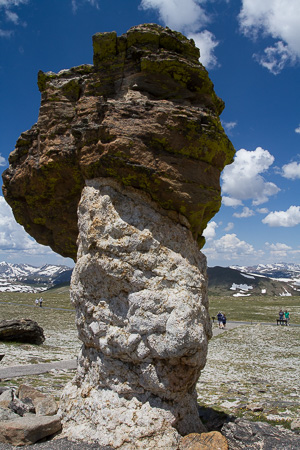
Enormous mushroom-shaped rock formations, called “tors” by geologists, formed when these mountains were under the sea (imagine that!). Layers of sand, silt, and clay slowly formed various types of granite that. The mushroom appearance was due to the type of granite in the “stem” eroding more quickly than type of granite (schist) in the cap.
And then in contrast, miniature flowers at your feet. I got down on my hands and knees to see and photograph them: Colorado Columbine, Alpine Forget-Me-Nots, and Pearly Everlasting. Some of these flowers had tiny blooms the size of my pinkie fingernail. Endless fields of tiny sunflowers turning their faces toward the sun for warmth.
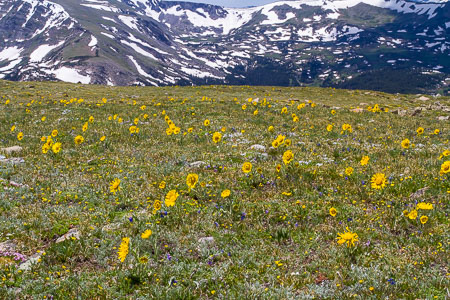
One of the trail signs explained that “alpine plants contain anthocyanin, a chemical ‘antrifreeze’ that converts sunlight into heat. Plant hairs provide a furry coat that reduces the loss of heat and moisture. These hairs also protect plants from the intense ultraviolet radiation that is twice what it is at sea level.”

There is also wildlife in this area, although only a few animals, such as pikas, ptarmigans and marmots, live here all year long. Others, such as ravens, hawks, coyotes and elk, will migrate onto the tundra during the summer months. A bit farther down Trail Ridge Road, I saw a marmot in the distance, and we did encounter herds of elk farther up the road, but on this trail itself, most of the creatures I saw where tiny, like the ladybug I photographed, climbing in and around all the brightly-colored flowers.

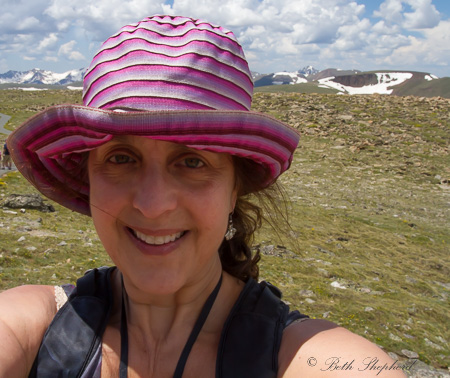
It was all so breathtakingly beautiful that I felt like doing jumping jacks, and so I did. It felt great–12,000 feet, the Rocky Mountains as a backdrop. I really liked the air up there.
Take the road less traveled, Beth
For nearly ten years, whenever Big Papa and I went on vacation, we’d anticipate seeing wildlife in our backyard. At the cabins and B&Bs we rented, we’d find notebooks detailing other visitors’ observations:
“Every day, two otters played in the lake just off the shore.”
“There were whales breaching at the beach!”
“We saw a herd of elk in the field and a mountain lion off in the distance.”
“Two big-horned sheep up on the ridge.”
We were never able to report similar close encounters, until….
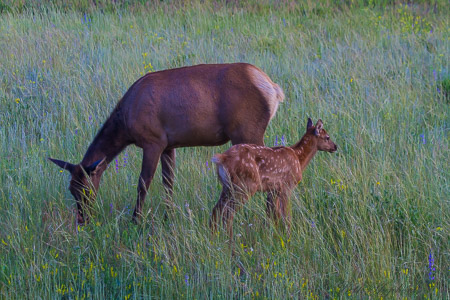
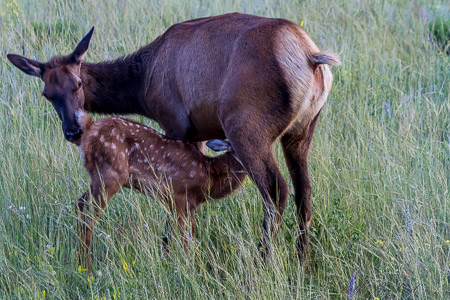
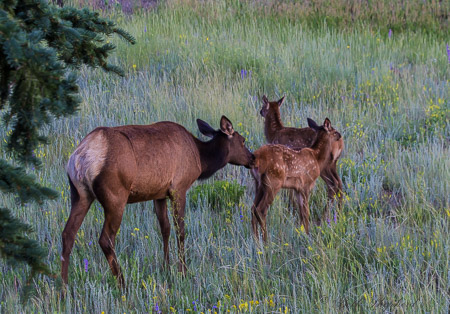
Rocky Mountain National Park Elk in our yard! And I mean right in our yard. On several occasions, we’d come home to find cows and their calves, nibbling their way around our cabin. We even got to watch one mama nursing her little one merely feet from our front deck.
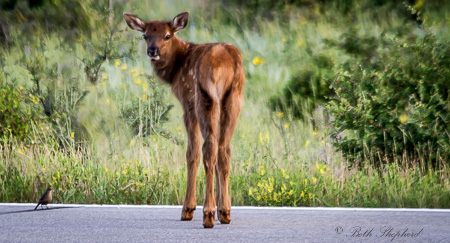
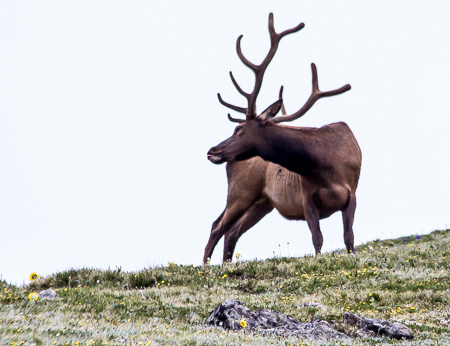
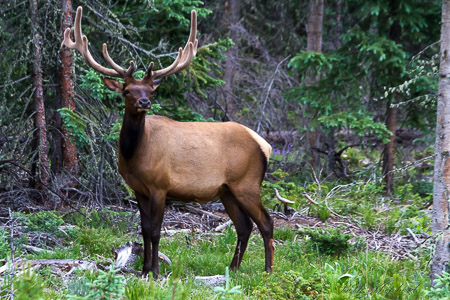
On the days when we traveled farther into the park, and higher up in elevation, we began to see a few bulls, their antlers still covered with soft velvet. So majestic!

Take the road less traveled, Beth


We recently returned from spending six days high in the beautiful Rocky Mountains. Our lovely cabin (a VRBO rental) was located across the street–literally–from Rocky Mountain National Park.
Here are two members of the welcome committee, who greeted us at the road marker for Estes Park.

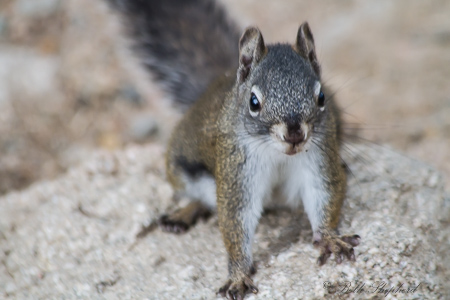
And the not-so-native wildlife.
Long’s Peak, the view from our deck and bedroom. Big Papa climbed this 14,259 foot mountain [almost to the top] some 30 years ago.
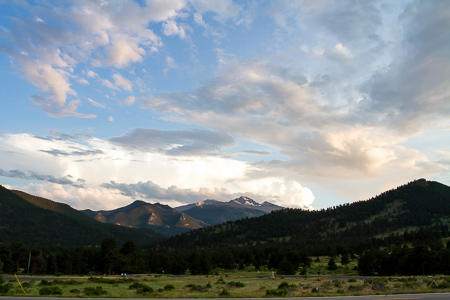
It was my maiden visit to Colorado, and the first time I’d stood at this elevation since Big Papa and I toured Tibet in 2008. The elevation of Estes Park is 7,522 feet though, during our stay, we went for a walk on the ‘Tundra Communities Trail‘ and, at the highpoint of the trail, found ourselves at an elevation of 12,285 feet.
Elk, moose, marmots tundra, and mountain peaks awaited our exploration. More posts about our trip in the Rockies to come!
Take the road less traveled, Beth
I saw you in my dream
We were walking hand in hand
On a white sandy beach of Hawaii
We were playing in the sun
We were having so much fun
On a white sandy beach of Hawaii
The sound of the ocean
Soothes my restless soul
The sound of the ocean
Rocks me all night long
~Israel Kamakawiwo’ole
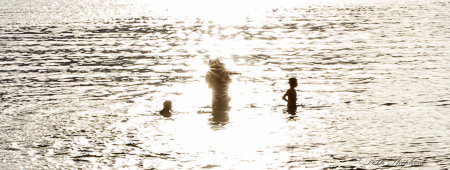

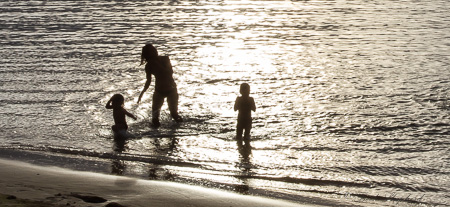


Take the road less traveled, Beth
Naked in the river skinny dippin’ my way
In the waterfall I just wanna play
~Red Hot Chili Peppers, Naked in The Rain

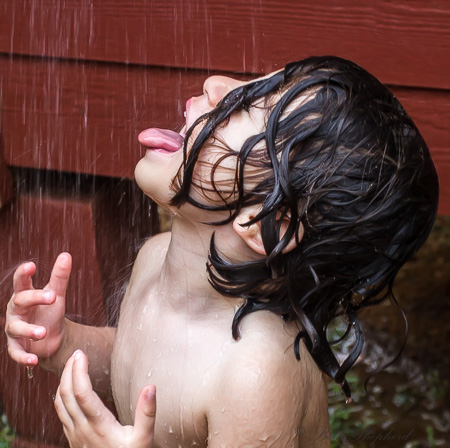
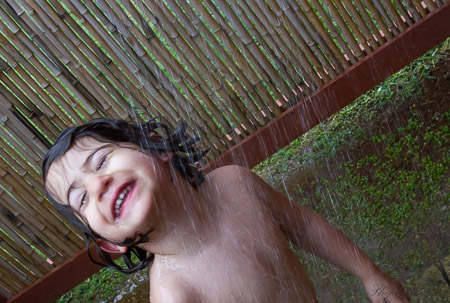
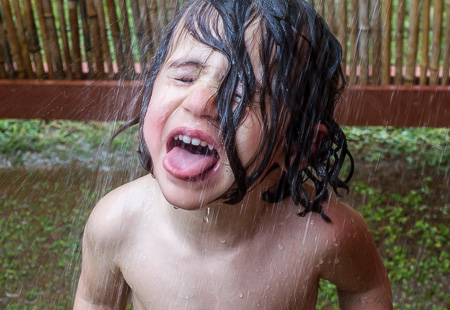
If you ask my daughter what she enjoyed most about our trip to Kauai, she will tell you: The outdoor shower! And I have to admit, it was one of the highlights of our vacation for me too. Every day, the two of us would strip down–nudie-tootie as we like to call it–grab our towels, and head outside.
Our little ritual was pure bliss. There is something absolutely freeing about being in a place warm enough and private enough to let it all hang out. We’d laugh and dance around. Afterwards we’d take our towels and strut proudly back to our vacation cottage, both feeling like we just got away with something. I loved seeing how utterly happy and carefree my Baby Bird was as she experienced this simple pleasure.


Take the road less traveled, Beth
You got your own style, now let it come through. And remember no matter what, you got to be you.
~ Sebastian from the Little Mermaid
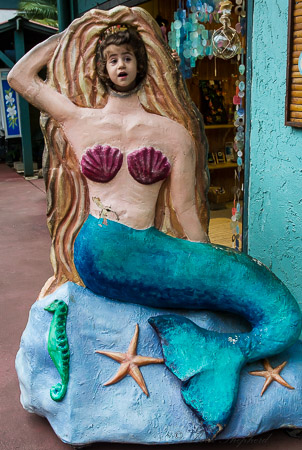
Anini Beach is, in my biased opinion, the best beach on Kauai (at least on the north shore) for little swimmers (and big swimmers too). It is just north of Kilaeau town, a lovely crescent-shaped stretch of beach with a sandy gentle slope into the ocean. We made several trips during our vacation on Kauai. Anini is one of the few beaches visitors (and locals) can enjoy all year long.

A local tipped us off that if you keep driving north, past the main beach, there is a lovely beach (part of Anini) that is perfect for keiki (Hawaiian for “the little one”). And indeed it was! Our little mermaid was in heaven: the waves were gentle, and the sand was soft. She had a blast in the water (her first ocean visit) splashing, jumping, and frolicking to her heart’s content.
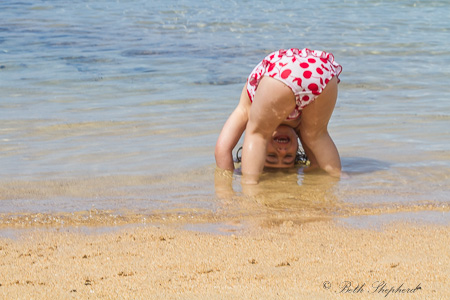
Back on the sand, we built sandcastles (and the sand there is perfect for this, not too rocky, not too soft), chased chickens (naturally!), and watched the SUPs (Stand-up Paddle), surfers (on the southern-most edge of the beach), and snorkelers. On the main beach there are picnic tables, bathroom and outdoor shower facilities, and a boat launch (and ample parking). Apparently, it’s also possible to camp at Anini Beach. We saw a few tents when we were there. Something for just about everyone.
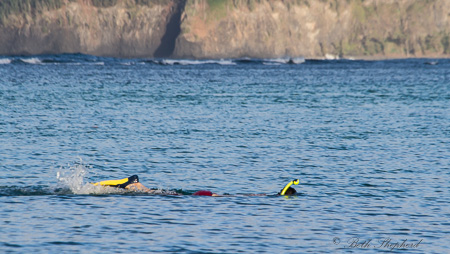

Big Papa and I traded off keeping an eye on our own keiki so we could each try a bit of snorkeling and, despite the somewhat murky waters, we saw a lot of fish…and honu (turtles)! I’ve heard people say that the coral on the extensive reef at Anini has not fared well in recent years, but we still found plenty of sea life, including the ever-colorful (and mouthful to say) Humahumanukanukaapua’a or Triggerfish, super skinny trumpetfish, and a really cool-looking snowflake moray eel.

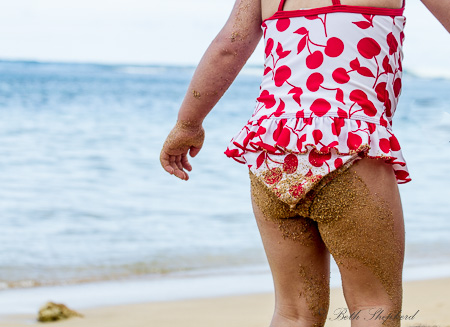
Each time we had to pack up and head home, I felt a little sad. Thank goodness–memories of a good time spent at Anini aside–each time we left, we took a bit of the beach with us.
Take the road less traveled, Beth

Why did the chicken cross the road? Because, on Kauai, there isn’t a road without them.
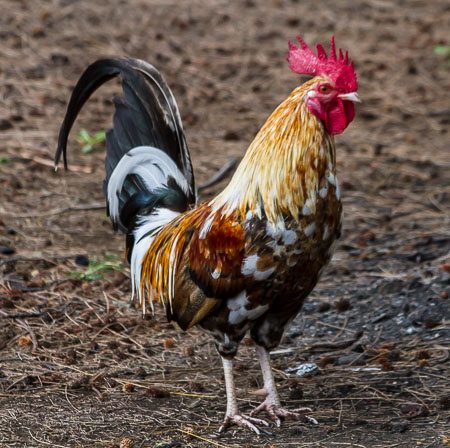
While Hawaii’s official State bird is the Hawaiian Goose, or Nene, on Kauai everyone jokes that the “official” birds of the Garden Island (aka “Chicken Isle”) are feral chickens (and wild roosters in particular). Chickens and roosters are everywhere: at the airport, in parking lots, at gas stations, in shopping centers, on the golf courses, on the beach and in the woods.
Lovely Kauai, the garden island where you can warm yourself in the sun, while you listen to the waves crashing on the shore, and–Cock-a-doodle-doo–all day long! One of the biggest rooster-related complaints is the 24-7 crowing. Apparently Kauai roosters aren’t concerned about whether it’s morning or night.
Chickens have a long history in the Hawaiian islands, a melding pot for people, plants, and animals. The first arrival of the Polynesian voyagers, ancestors of the Hawaiian people brought everything they needed to survive. Plants like bananas and coconuts, and animals such as chickens (moa), pigs (pua’a), dogs (‘I’ilio), and rats (‘I’ole). These animals were introduced alongside native populations of birds, monk seals, and bats…and they thrived, often to the detriment of native species.
The spectacularly plumed roosters and rainbow-colored spotted hens you see on Kauai now, are descendants of the original Moa (or canoe fowl). But they have strengthened their genetics by co-mingling with traditional white barnyard fowl and fighting cocks (introduced on Kauai by Filipino immigrants during the island’s early plantation days) that were originally housed in pens and chicken coops throughout the island.
Kauai is one of the greatest places in the world to just be a chicken! If you ask why chickens rule the roost on this Hawaiian island, you’ll get a number of different answers. The truth doesn’t lie in any one reason, but in a combination of them all.
The first and most important reason is that Kauai has never had a serious predator to the chicken. Other Hawaiian Islands have escaped this chicken profusion because early sugar growers introduced mongoose to all the islands except Kauai. They believed that mongoose would keep the Polynesian rat from decimating the sugar crop. However, the growers overlooked the fact that mongoose — natural rat killers — are daytime animals, and rats are nocturnal, so the two never engaged in battle. Mongoose also eat bird — and chicken — eggs , thereby greatly reducing bird populations on all islands but Kauai. Local legend has it that a mongoose bit the hand of a Kauai dockworker, who knocked the entire crate of mongoose into the bay, and no more were imported. So the next a rooster awakes you from peaceful slumber, you can thank the plantation bosses who kept the mongoose away from the Garden Isle. The good news is that Kauai, lacking in mongoose, has been able to maintain the population of native and endemic bird species on the island.
Foul weather is another contributor to the abundance of fowl. Some of the chickens are domesticated chickens that get released (on purpose) into the wild and then breed with Hawaiian jungle fowl. But mother nature has played her hand in chicken overpopulation too with various hurricanes, tsunamis, and other weather events that release large populations of domestic birds into the wild. Hurricane Iniki on September 11, 1992 leveled Kauai, and is well known for releasing many domestic birds into the wild. Those in the know about the Kauai chicken population can generally tell if a bird is a domestic, native, or cross-bred chicken. Certain colors, body shapes, and feathers make the moa (wild native jungle fowl) distinct.
The last major contributor to the Kauai chicken population explosion is a jaw-dropper, even to some people who have lived on Kauai all their lives. Kauai’s wild jungle fowl is protected: under state law–like all birds of Hawaii–the moa is protected as an important part of nature on the island. Although the law itself and the repercussions of breaking it, are rarely spoken of, harming wild moa is a crime in the state of Hawaii.

So what are they good for? Well, for one, their adorableness as baby chicks, and their photogenic beauty as adults (the roosters, especially, are one colorful bunch).
You might also look at them with an appreciation for their longstanding place in the Kauai landscape and culture! And, possibly most important, they like to eat bugs, lot of bugs (like the much feared poisonous centipede).
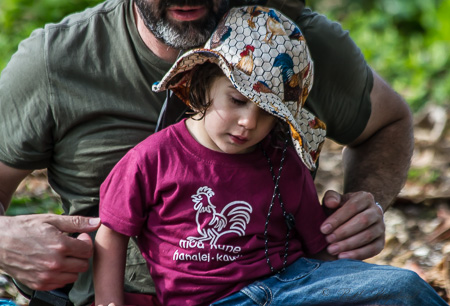
Even Baby Bird found something to crow about. She started the trip rooster-ready with an awesome sun hat (shout out to Tracy of Impwear for finding her LAST rooster hat in Baby Bird’s size–can’t think of a better place to wear it than on Kauai).

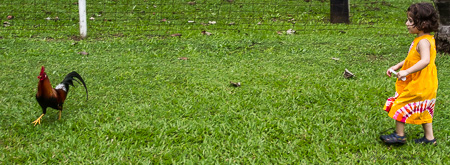
Then came the chicken chasing. I mean, truly, if you are a toddler what else could possibly be more fun than chasing chickens. Fortunately (for her), they are faster than she is.
Heck, she even selected the Moa Kane Keiki Kruisers tee-shirt at Magic Dragon Toys & Games in the Princeville Center. She could pick from a whale, a turtle, a pig, a dragon (Puff), dolphin, shark, octopus–yet she chose the chicken. I swear I did not influence her choice. Quite honestly, I was angling for honu (turtle).
Aside from the annoyance and the noise, there is one more (surprising) thing Kauai moa are not good for: eating. You know that expression, “tough old bird?” This defines the culinary category in which the chickens of Kauai fall.

There is an old Hawaiian proverb: If you like eat da chicken get two pots of water to a boil. In one pot put da pohaku (lava rock) and in the other put da moa (wild chicken). Once the lava rock is done da moa is ready to eat.
Take the road less traveled (but look both ways before you cross), Beth
Puff, the magic dragon lived by the sea
And frolicked in the autumn mist in a land called Honah Lee
~Peter, Paul, and Mary

“Look, you can see his eye,” said our guide Amos (“Famous Amos” or “Amos of the pink tee-shirt”), pointing to the bare brown spot on the side of a green mountain looming in the distance on the north side of Hanalei Bay (Han-a-lay, rather than Han-a-lee as in the song). “And those ridges are his back.”
I squinted, peering across the waves. Sure enough, there he was–Puff–the mythical magic dragon, rising majestically from the ocean surf, unfurling his tail towards towards the mountain peaks of Hihimanu, Namolokama and Mamalahoa, stretching his powerful jaws into the blue-green ocean beyond.
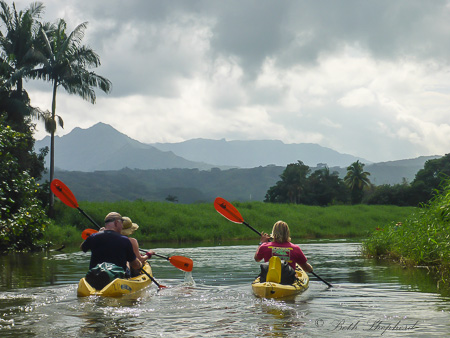
Amos, quintessential surfer boy–slim and toned, bronzed skin, hair bleached blonde by the sun, Hawaii transplant by way of California–was our guide for a five-hour tour up, and then back down, the Hanalei River. Our adventure companions, another couple, call Wyoming home, but hail from central Pennsylvania (he) and Rochester, N.Y. (she). What are the odds we’d find ourselves paddling in the shadow of Puff with two people who grew up a stone’s throw away from where we grew up?

We chose Kayak Kauai, the oldest kayak tour company on Kauai (and the first to offer kayak tours of Kauai’s Napali coast) for our trip, the Kayak Kauai Hanalei Blue Lagoon X-tra, which began at the mouth of the river with Amos covering the basics of paddling and kayak safety before we hopped in and headed up river. The sky was slate gray in spots, threatening rain and blue in others, a glimmer of hope. I focused on the bits of blue sky. Much of our vacation–up to this point–had been decidedly gray and rain-soaked.
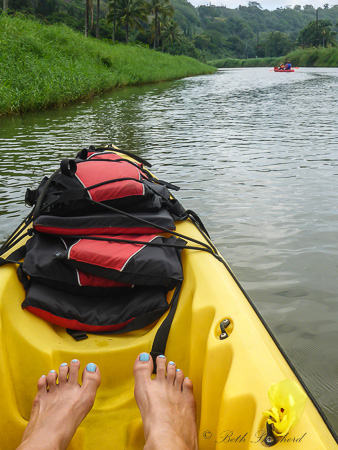
Amos told us we would paddle up the river (and against the current) for about two miles before turning around and paddling back to Hanalei Bay, where we’d have the opportunity (surf and weather permitting) to try our hand, er paddle, at ocean kayaking. The river was calm and the current mild (though there was a noticeable difference in the amount of exertion required when we headed back down the river with the current pushing us along).

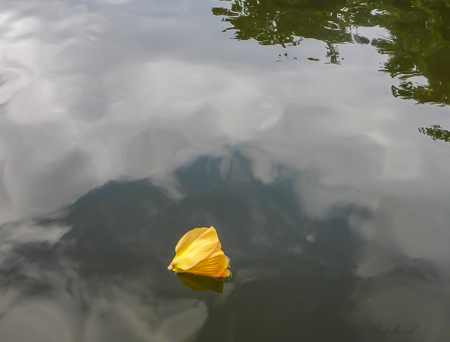
We passed other kayakers and saw several stand up paddle boarders (SUP) as we lazed our way along the river (Kayak Kauai also rents equipment and offers stand up paddle boarding, kayaking and surfing lessons). Amos pointed out plants and birds while telling us a bit about the history of the river. We each nibbled on a yellow hibiscus plucked from the abundance of hibiscus plants lining the banks of the river (hibiscus tastes like a milder version of the nasturtiums I pick from our garden), chatted and laughed. Big Papa and I, along with our traveling companions, expressed gratitude that we found someone to watch our kids (grandmother for them and a babysitter for us), making it possible for us to venture out sans children.
When we decided to turn around and head back toward Hanalei Bay for our ocean kayak lesson, lunch and snorkeling, one of our traveling companions asked, “Do you ever encounter sharks in the bay?”
Amos replied, “You’re more likely to be hit by a coconut in the U.S., than be attacked by sharks, bears and lightening combined.
” But do you ever see sharks?”
“Oh yeah.”
We all hoped out loud that we wouldn’t.

I know I forgot all about it, at least for the ten minutes it took for us to paddle through the choppy waters of Hanalei Bay to a small slice of beach where Amos set out a delicious picnic lunch. Extra (gluten-free!) brownie points for the option to enjoy a gluten-free sandwich (we submitted our lunch request pre-trip). This was a huge bonus for Big Papa who usually finds himself munching on sport bars or removing the insides of the sandwich from the bread. As for me, admittedly not a “chips person,” I could have easily eaten the entire bag of locally made taro chips all by myself. And then there was the fresh pineapple. We each received a generous piece of mouth-watering fruit that Amos cut straight from the source.
After lunch, we did a bit of snorkeling. Not much to see–a few fish here and there–with somewhat murky water from all the recent rain, though it’s always fun to spot–if not say–Humahumanukanukaapua’a (otherwise known as the Reef Triggerfish, and the official state fish of Hawaii).

My muscles felt sore, in a good way, as we paddled across the southern-most edge of Hanalei Bay, with Amos offering pointers on how to ride a few waves back to our starting point. We had smiles on our faces, and even a bit of a tan on our shoulders as we pulled our kayaks onto the beach.
Mahalo to Kauai for for a few (much needed) hours of warmth and sunshine. Mahalo to Kayak Kauai and our guide Amos for a fun afternoon paddling in the waters of Hanalei. And Mahalo to Puff, for keeping an eye on us during our magical adventure.
For more information about Kayak Kaui’s adventure trips, check out their website: http://kayakkauai.com/
Take the road (or the river) less traveled, Beth
Our trip was provided free for review purposes, but all opinions expressed in this article are my honest opinion.
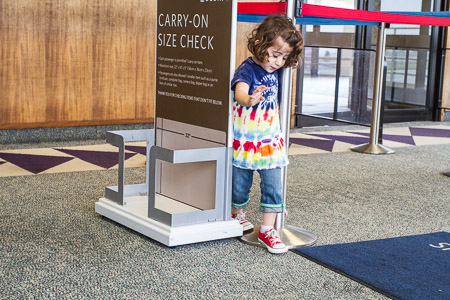
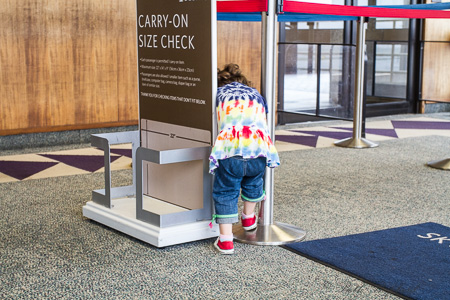
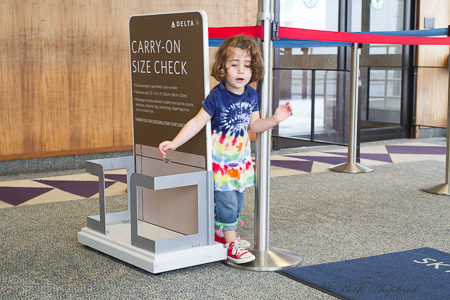
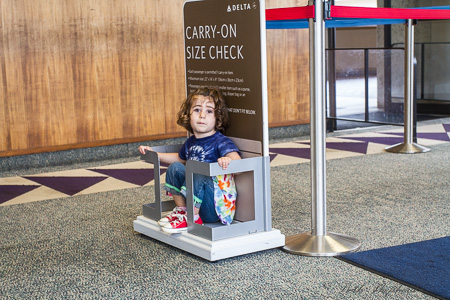
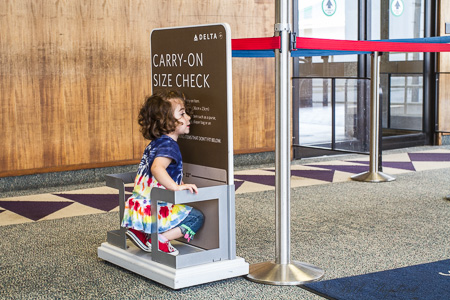
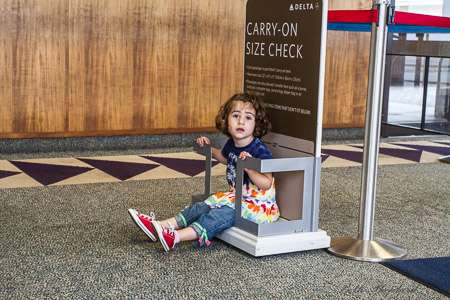
How to pack a toddler? In our case, said toddler meets all of the size requirements for carry-on. Now if only we could convince her to crawl into the overhead luggage bin and take a nap.
Take the road less traveled, Beth
And check out more cool shots on Delicious Baby Photo Friday!